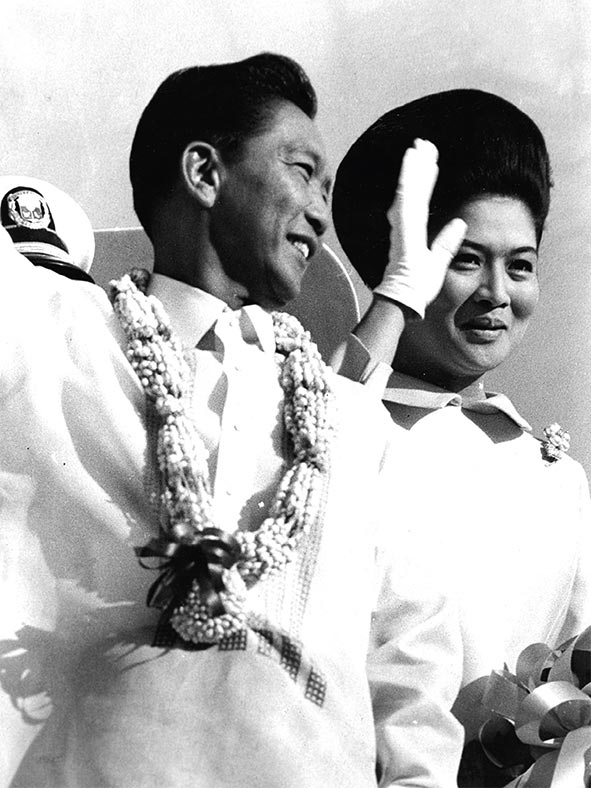
When President Ferdinand Marcos declared Martial Law in 1972, among the first things he did was grant himself, and only to himself, the power to make the laws of the Philippines. With great power comes great responsibility. With absolute power, ah fuck it.
Creating military tribunals to try pornography cases. To be accurate about it, the military tribunals created during Martial Law by Presidential Decree No. 39 had jurisdiction over any offense where the penalty exceeded six years in prison. When the penalties for creating or distributing obscene literature were increased in 1976 to at least six years in prison, the power to seize and examine those smuggled Playboy magazines now fell with the military generals.
Grant Philippine citizenship to Ronnie Nathanielsz. In 1973, Marcos issued Presidential Decree No. 192, granting Filipino citizenship to Ronald Fredrick William Nathanielsz, formerly a citizen of Ceylon, as a reward for “his long and continuous service to the Filipino people, in the field of journalism.” While Nathanielsz has confined himself to sports journalism in the last 25 years, his greatest notoriety came as the anchor and booster-in-chief of the egregiously pro-dictator government TV network MBS-4.
Criminalizing rumor-mongering. According to Presidential Decree No. 90, the spread of rumors, false news, or information and gossip undermined the stability of the government and the objective of the New Society. The penalty for offering, publishing, distributing, circulating, and spreading these rumors—a prison term of between six months to six years.
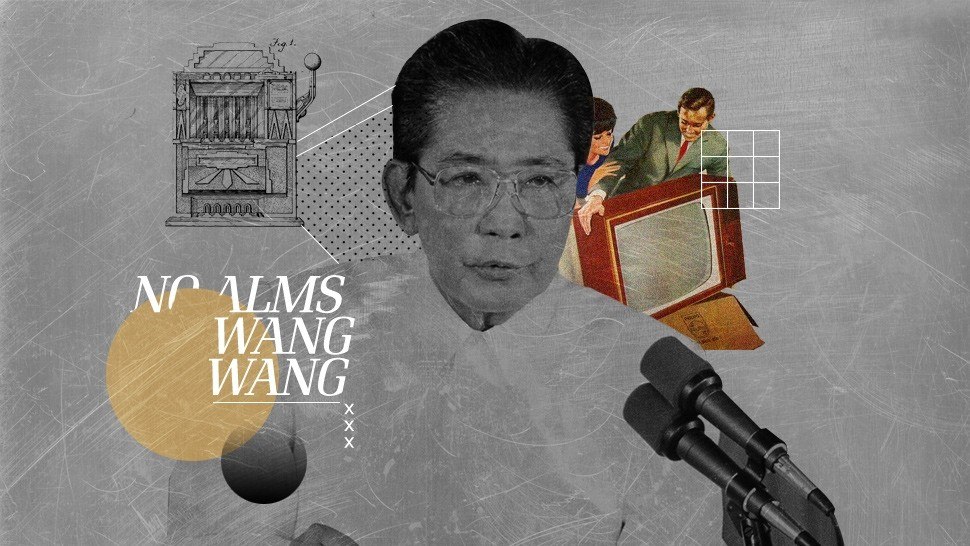
Criminalizing wang-wang. Presidential Decree No. 96 professes care for your mental stability, noting that “much of the chaotic conditions from which our people have suffered are the direct result of indiscriminate and unregulated use of sirens, bells, horns, whistles, and similar gadgets that emit exceptionally loud or startling sounds.” Marcos made it a crime for private citizens to install these devices on their motor vehicles, punishable by imprisonment for six months.
Jailing doctors who don’t report treatment of injuries to the police. Presidential Decree No. 169 imposed a one-to three-year jail term on doctors who failed to report to the Philippine Constabulary “by the fastest means of communication” if they had treated any person for serious or less serious physical injuries. While such a law ostensibly could serve the public good (such as ensuring punishment for those who inflict domestic violence), it also dissuaded Marcos-era “subversives” from seeking proper medical care.
Jail time for exporters of abaca seedlings. Perhaps exporting abaca seedlings is, as Presidential Decree No. 216 states, “detrimental to the abaca industry and the overall economy of the country.” But imprisonment for between six months to 12 years?
Requiring ROTC grads to notify military before leaving country. Under Presidential Decree No. 183, all reservists of the Armed Forces of the Philippines (i.e. ROTC graduates) were required to notify the Armed Forces of the Philippines before leaving the country, otherwise their passports or travel clearances would not be validated. The same decree also curiously (given this was in 1973) required the National Computer Center to “render such technical assistance as may be necessary in the updating and analysis of records of reservists.”
The crime of beggging and giving to beggars. The Mendicacy Law of 1978, while remaining in place, is among the least enforced laws of the land. The penalty for an adult who uses “begging as a means of living” instead of applying themselves “to some lawful calling” may run as high as imprisonment for a period not exceeding two years. A person who gives alms to beggars is punished by a fine not exceeding 20 pesos.
Outlawing pinball and slot machines. The reason for the ban, according to Presidential Decree No. 519, was that “the proliferation of these gambling devices adversely affects the moral regeneration program of the Government under the New Society, especially the youth.”
The better appreciation of the laws of nature and the efforts of man to conquer space. If you ever wondered why we have a National Planetarium, BALNEMCS is the reason invoked by Presidential Decree No. 804-A.
Tax exemptions for 1974 Miss Universe contestants. These days, Congress has to pass a law to grant tax exemptions. Back in 1974, Marcos could dictate who would be exempt from what taxes. He used that power through Presidential Decree No. 486 to exempt “all prizes in cash or in kind, including talent fees and gifts” given to participants of the Miss Universe pageant held that year at the Folk Arts Theater.
Two hours of daily public service prime-time programming for TV/radio. Presidential Decree No. 576-A required all radio and TV stations to allocate two hours of their prime-time programming to “programs rendering public service.” “Public service” referred to “news, educational, and cultural presentations and other programs informing the people of advances in science, industry, farming, and technology; of policies and important undertakings in government designed to promote or safeguard the public welfare; of matters related to the physical, intellectual, and moral development of the young; or of traditions, values, and activities which constitute the cultural heritage of the nation.” In short, featuring Imelda in a lab coat touring the kabukiran surrounded by children bearing garlands.
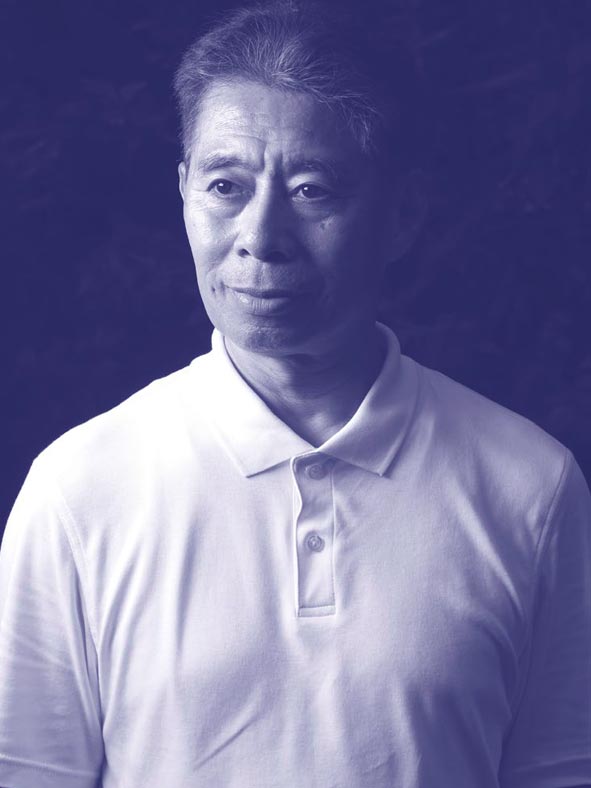
NERI COLMENARES Former congressman, human rights lawyer
If you’re in a position of power or wealth, never abuse and never be arrogant.
The second lesson my father told me: “Kung tama ka naman, tindigan mo. Pero kung mali ka, dapat aminin mo.” That’s why I could be very brave in speaking out against something which I think is right, but I have no problem in admitting if I make a mistake.
In a Martial Law situation, there’s no dialogue. Either shut up or you go to jail.
Initially, I didn’t mind Martial Law. I was in grade 6 when it was declared. Pansin ko lang, walang pasok! Ganda ng Martial Law! (laughs)
My antagonism to Martial Law started from personal teenager interests. Sabi ko, this is not a life I want to live! Uuwi ka ng alas onse, may gusto ka pang ligawan, hindi mo na maligawan. Ang sama-sama ng buhay pero ‘pag basahin mo ang dyaryo, parang ang ganda-ganda ng buhay.
The Student Catholic Action taught us that people have rights. I began to be critical of the human rights record of the Marcos Administration.
Sometimes it’s not even the intelligence information they want to get from you. It’s just the fact that they have the power over your life, or your death.
There was a crackdown on the Church. The military arrested a lot of people from the Church. Naalala ko pa ‘yon, social workers ng Share and Care, postulate for poor settlers, Student Catholic Action, urban poor…Siguro mga 13, 14 kami.
Ang ginawa nila, pinalabas nila itong si Don to meet me. So nagkita kami ni Don near the cathedral. Sabi ko, “O, Don, kamusta?” Sabi niya, “Neri, hinuli ako eh.” “Bakit naman?” Eh siyempre, the usual charges, you know, you’re a rebel…Sabi niya, “Pinalabas lang ako para hulihin ka rin.” Sabi ko, “Ha?” “Oo, paglabas mo rito, huhulihin ka rin.” Sabi niya, “Wag kang mag-panic ha.”
Pagtawid ko sa kalsada, kita ko na ‘yong traditional na military dati—’yong malaking tiyan, may flash bang, naka-sunglass, naghihintay sa akin. But look at this, when they arrested me, sabi nila, “O, Neri, may itatanong lang kami sa ‘yo. Wag kang pumalag ha.” Hindi na ‘ko pumalag. They hailed a taxi and then they put me there and then dinala ako sa headquarters.
They’re going to [make you] disappear—walang warrant of arrest, kikidnapin ka lang—but they’re hailing a public utility vehicle. That’s how impunity was during Martial Law. Hindi sila takot na may taxi driver, it doesn’t matter if the taxi driver witnesses that. Walang problema ‘yon. So dinala ako sa headquarters. Mabuti naman dinala ako sa headquarters, I was thinking, kung dalhin nila ‘ko somewhere else baka mamamatay ako eh, safehouse or torture chamber…At least kung headquarters, inisip ko, public official ‘yan.
The first thing the military does to you when they torture you is to destroy your self-confidence and humiliate you. Wala munang physical. To make you think na, “Kami ang in power dito. You are a nobody.”
There was this lieutenant, I remember, may riding crop pa siya. Sabi niya, “Hindi totoo yong confession mo. Kainin mo yan.” Pinakain sa ’kin ‘yong sinulatan ko. Buti na lang at the time, uso ‘yong onion skin. Matagal ko rin nakain ‘yon ah, siguro mga 45 minutes, kasi iisa-isahin mo rin, mahirap eh kahit onion skin. Pagkatapos noong kain, bibigyan ka ulit. Siyempre, nag-isip ka na ngayon, “Anong isusulat ko dito na hindi ko kakainin?” Kaya lang, wala ka naman ginawang masama eh. You tell the truth.
At the time, suntok, sampal…At the time, I was so young, I thought I was dreaming. Sabi ko, “This couldn’t really be true. Ano bang ginawa kong masama? Did I steal? Did I kill? I was 18 years old. So shocking yan for an 18-year-old kid ‘di ba?
Ang isang ginawa nila doon sa akin, may sofa, nakaupo ka pero meron silang kuryente, parang cattle prod, na bubugbugin ka nila dito. ‘Di, parang nakukuryente ka ‘di ba? Ang tendency mo, tatayo, kasi gusto mong tumakas. Doon sa harap mo, may naghihintay na susuntok talaga sa’yo…
There comes a time when you reach a threshold siguro, where, na-numb ka na eh, masakit pero that’s it. Wala nang isasakit pa, ‘di ba? Pero ang mental torture, grabe talaga, that’s something you will never forget. Ako nga, di ko na maalala ‘yung mga suntok-suntok. ‘Yong mental torture, ‘yon ‘yong grabe, it was really well done.
Isang mental torture pa na naalala ko, isang gabi, kinuha rin ako. Lasing ‘tong intelligence officer, malaking mama. “Are you lucky?” sabi niya sa akin. “You think you’re lucky?” Umi-ingles. Tahimik lang ako siyempre. Meron siyang malaking revolver. Kinuha niya lahat ng bala, Russian roulette. “Tignan nga natin if you’re lucky,” sabi niya.
It’s a badge of honor to be arrested for asserting your rights and for defending the rights of others.
Pag sa loob pala ng bunganga mo ang baril, parang ang lakas ng pakiramdam ko akala ko pumutok. I could feel my brain splattered on the wall. Grabe ‘to ah. Drain na drain talaga ako dun, ‘yon talaga you’ll never forget that.
Ang masama pa, inulit niya pa. Sabi niya “He’s very lucky, o sige sige, tignan nga natin kung pwede pa.” Inulit niya. Noong second na putok talagang, wala na eh, di na ako…Dalawang beses akong namatay sa isang gabi. He never asked me a question. He was just torturing for torture’s sake.
Rape, sabi nila, is not about sex—it’s about power. ‘Yan ang torture. Sometimes it’s not even the intelligence information they want to get from you. It’s just the fact that they have the power over your life, or your death. And that gives them the feeling of being a god.
I think the main thing that really made me survive was the fact that I knew that what I was doing was right. I was not ashamed that I was in prison. In fact, I was proud. It’s a badge of honor to be arrested for asserting your rights and for defending the rights of others.
Most of us were church workers, so nobody blamed God for that. In fact, I’ve seen many of my kasama sa loob na na-strengthen pa nga ang faith nila. Everybody blamed Marcos and the US. The torture manual of the US, I saw years later, very similar doon sa torture method. Nobody blamed God. We believed it was Marcos and the US.
After my first arrest, I didn’t want to go back to activism. Na-trauma ako eh, sabi ko, I don’t want to suffer that again. Pero sinusundan-sundan ako ng military. At that time, every time I walked, tumitingin ako sa side mirror ng mga kotse. ‘Pag naglalakad ako, parating may mga sumusunod…When I go to sleep, ‘yong bintana ko sinasara ko kasi baka may magtapon ng granada. For a 19-year-old, I was really weird.
When Ninoy died, I was in prison in the North, in [a PC camp] in the Ilocos Region. ’83 ‘yon diba? So August ‘yon. Sabi namin, “Naku, baka hindi tayo ma-release nito!” Tapos narinig namin na later on, lumalaki ‘yong mga rallies. Ah eto na, this is it, eto na ‘yon.
After I graduated from law school, a professor of mine, Alfredo Tadiar, asked me to help him in his work as chairman of the National Amnesty Commission. “May mga applications dito sa akin,” he told me. “Tignan mo what you think, are they okay or not okay, kasi lawyer ka.” May isa doon na lumapit sa akin. He was half-paralyzed, ‘yong mukha niya bagsak, parang na-stroke. Naka-tsinelas, bedraggled. Sabi niya, “Sir, hihingi sana po ako ng tulong kasi RAM-SFP-YOU [Rebolusyonaryong Alyansang Makabansa-Soldiers of the Filipino People-Young Officers’ Union] ako. Ngayon natanggal po ako sa serbisyo. Eh mahirap po ang buhay, na-stroke ako. Hindi ko makuha pension ko. So sana ma-grant ako ng amnesty para naman makuha ko yong pension ko. Kasi ang hirap na ng buhay.” Sabi ko, “Sige.” Pamilyar, sabi ko. Pamilyar ‘to ah. “O, anong pangalan mo?” Sabi niya, “George Yap.” Then I remembered. He was the Russian Roulette.
Alam mo, hindi ko maalala ang pangalan ng mga physical [torturers]. Marami sila eh, but George Yap will always be [remembered]. ‘Yong sinasabi ko kaninang walang hatred, wala naman talaga. Pero ‘yong isang kaibigan kong kasama ko ring nakulong, dalawa kaming nag-reserve na, “Yang George Yap, ‘yan ang may personal hatred tayo. Hindi talaga ‘yan papatawarin.” But [it had] been what, 20 years? So sabi ko, si George pala ‘to…tuloy lang. Pin-rocess ko ‘yong application niya kasi ibibigay ko sa chairman eh, kay Professor Tadiar.
Sabi ko [kay George Yap], “Nakulong ako diyan dati eh.” “Ha talaga, sir? Nakulong ka? Kailan?” Sabi ko, “1978? Kasama ko si…” Nagbanggit ako ng mga kasama kong nakulong, the more famous. Kasi I was 18 years old, I was not as famous as the others, ‘yong iba 25 years old, sila ‘yong sikat…Naalaala niya. Putlang-putla talaga siya…”Ikaw pala yon, sir?” Sabi ko, “Oo, naalala mo ‘di ba?” Sabi niya, “Oo, sir.” Putlang-putla talaga siya. Sabi ko, “Alam mo, ‘yong application mo kay Chairman Tadiar, hindi ko na papakialaman. You will be decided by the chairman on the basis of your merits. Wala akong sasabihin sa kanya na huwag. You argue your case. You will be decided.” Sabi niya, “Salamat, sir. Thank you.” Umalis na siya. And I did not even intervene and say to the chairman, “Eh malay mo, baka RAM-SFP-YOU nga naman siya.” So he left and he was granted amnesty.
He held sway over my life 20 years ago. Now, naka-tsinelas, tinatawag niya akong “sir,” but I didn’t assert my power to hold sway over his life. So siguro ‘yon naman ang lesson doon sa kanya. In fact, sa kanya bumalik. And I think grabeng penalty na rin sa kanya in the end, paralyzed siya.
IMAGE: Jake Verzosa
There’s nothing good that I can say about Martial Law.
Marcos misinterpreted that the Divine Trinity means concentrating the three powers of government in one man.
Maybe Hitler did something right in his life. Maybe the Nazis did something good, but all of that will be dwarfed by the horrible violations of their time.
People sometimes come up to me and say, “Di ka ba nagsasawa, napapagod, nanghihina?” Sabi ko, “Physically, mapapagod ka rin eh. You can only take so much. Pero hindi talaga ako magsasawa dito.”
Ang tuloy ko diyan basically rests on two basic principles na pinanghahawakan ko. The first is trust. Trust in the capacity of the Filipino people to change their destiny. That the Filipino people will know that, eternal poverty is not their fate. This corruption, violation of rights, this is not forever.
May trust ako diyan sa capacity ng mamamayan. Otherwise, kung wala kang tiwala sa mamamayan, eh di wala na, mag-abroad na lang tayong lahat.
The moment you have the trust in the people, in their capacity to reform this society, you cannot help but go on to the second and inevitable principle: Hope. The moment you trust, you begin to hope.
In the end, ang ibig ko lang sabihin, we will continue to do this because not only will we believe that we are right, but we will also believe that the people will win in the end.
While exiled in the Netherlands in 1991, leading Communist Party of the Philippines (CPP) cadre Nathan Quimpo entrapped a spying CIA agent, and exposed him to the Dutch media. Previously, his brother Ryan had narrowly escaped to France to build a solidarity network for the Party. Even earlier, their eldest brother Norman was arrested for allegedly aiding in the smuggling of arms to the CPP’s New People’s Army (NPA). Their two other brothers, Jan and Jun, were martyred in 1977 and 1981 respectively.
Subversive Lives (Anvil, 2012), a joint endeavor of the Quimpo siblings compiled by Nathan and sister Susan, reads like a collection of fictional short stories. Martial law, after all, was a time when the bien pensant became anti-capitalist revolutionaries—fiction by today’s standards. Apart from being the most rigorous, the book is also the best-written work in this subgenre, bereft of the usual clichés like “Let’s remember martial law for the sake of our children.”
Those who have shared in the political illusions of the 20th century, notes historian Tony Judt, have a special insight into its history. Most of the ten Quimpo siblings, who were either members of the illegal CPP or its affiliated front organizations, participated in the fantasy of Jose Maria Sison’s Marxist-Leninist-Maoist Communism. In this sense, they are emblematic of a generation of left-wing baby boomers, who forsook middle class comforts in order to “serve the people.”
But the movement they once represented is obscure. Philippine Communism is fleeting, masked in media obfuscation, whereby a communist is never simply a communist, but rather a “militant,” a “national democrat,” or a “reaffirmist” (explaining these terms is another act of obfuscation). The Quimpo memoirs provide one of the few honest insights into how the CPP works, from recruitment processes, to life in a safehouse, to the internecine debates of great leaders ensconced in Utrecht. As historian Vicente Rafael notes in the introduction, reading the memoirs makes one almost “hear the rhythm of the revolution.”
This revolution was the most significant threat to Ferdinand Marcos’s authoritarian rule. By the mid-1980s, NPA membership had peaked to 20,000 troops, with that army’s central command gearing for a take-over of Baguio city by 1987 (the latter fact is based on my own research). Amidst this, Nathan Quimpo was in Mindanao, experimenting with the Nicaraguan-inspired strategy of using general strikes to trigger an island-wide uprising. In Manila, the police were shooting at Susan Quimpo and her comrades as they participated in the numerous mobilizations in the aftermath of the Aquino assassination. “Unknown to us all,” notes Susan, “we were active participants in a brewing insurrection.”
That insurrection, now known as People Power, is represented in popular discourse as a sublime moment of national unity. But the cleavages in its wake reveal more about the fortunes of contemporary Philippines. The EDSA revolution not only ended the Marcos dictatorship; it also portended the withering of a revolution.
“Your stay outside the country will not be long. A victory celebration of the revolution will greet you at the airport probably sometime in the year 1990,” read a comrade’s letter to Ryan Quimpo shortly before he left for France. The message belies the revolutionary optimism of the movement, evident as early as the 1970s when Chairman Sison would often proclaim “See you in Malacañang!” Since the communists had “scientifically” assessed the movement of history, and adjudged it their ally, the Philippines was theirs for the taking. But they were wrong.
The Filipinos who stormed Malacañang in February 1986 wore yellow and would not paint the country red. Marcos would not be replaced by Sison, but by a “bourgeois democrat” in the guise of Cory Aquino. Toward the end of the book, Ryan Quimpo writes a pained elegy for his and his siblings’ movement:
“Our movement was the main force that had fought and weakened the dictatorship over the past 14 years. Cadres and activists paid a high price, many with their blood, to bring about this day of victory. And yet, before our eyes, this sought-after victory had been once again stolen by the Americans and the local elite they control.”
But would a red Philippines been any better? Life away from the movement and hindsight have led Nathan to answer in the negative: “Thank goodness, we didn’t win in 1986. If we had, the Philippines would have ended up with a regime worse than Marcos’s—a totalitarian dictatorship.”
The book thus ends with, as Nathan says, “mixed feelings.” Like the novelist Arthur Koestler, the former communists among the Quimpo family have left the certainties of totalitarianism to tell their story amid the dubiety of institutional democracy. But if the Marcos period has taught us anything, it’s that self-assured demagogues lead us astray. Listening to doubting gadflies may be a first step in a direction we have yet to comprehend. Subversive Lives, an ambivalent memoir, may not show us the way forward, but it tells us how not to regress.
IT WAS NOT SEPTEMBER 21, but September 22, 1972, that signaled the actual start of Ferdinand Marcos’ martial law regime. To be exact, 9:11 p.m. on that day 17 years ago— a Friday, as is the 22nd of this the first “Marcos Month” to be proclaimed by the admirers of the deposed despot.[1] The correct date of what Canor Yñiguez, Turing Tolentino, and Annie Ferrer [2] should commemorate as “Thanksgiving Day,” and the exact hour of the commencement of that infamy, are provided us by I.M. Escolastico, our friend and press brod of long standing (though he prefers to take things sitting down). And perhaps only in our fraternal estimate: pal Esky or Lasty or Ticong is one of the smartest, most perceptive and penetrating observers of the Pilipinas scene.
Ticong cites as his primary source or authority for the martial law data no less than the extraordinary author of Proclamation 1081: Ferdinand Edralin (Ferdie, Andy, Apo, Tuta, Hitler) Marcos, who in 1980 or eight years after the event found the gall, cost, and ghost to write, in Notes on the New Society, now mercifully out of print, that “the instrument ‘Proclaiming a State of Martial Law in the Philippines’ had been signed on the 21st of September and transmitted to the Defense Authorities for implementation…clearance for which was given at 9:00 p.m., 22nd of September, after the ambush of Secretary Juan Ponce Enrile at 8:10 p.m. at Wack Wack Subdivision, Mandaluyong, Rizal.”
As for “implementation” being 11 minutes behind martial schedule—that, claims Ticong, ever the scrupulous student of history, was Enrile’s driver’s fault. The man, on learning that the defense chief was supposed to have been waylaid by Communist terrorists at Wack Wack, had called it a day and gone home to his second common-law wife, leaving Johnny driverless for crucial minutes on that fateful night. [3] As for the ambush, Enrile has since humbly confessed, under the tender gaze of Our Lady of Fatima at Edsa, that it was faked, to justify the desperate need—of his boss, as it turned out—for martial law.
As for the ambush, Enrile has since humbly confessed, under the tender gaze of Our Lady of Fatima at Edsa, that it was faked, to justify the desperate need—of his boss, as it turned out—for martial law.
So all that business about the Inglorious 21st had more to do with Apo Marcos’ superstitious obsession with numbers—dates divisible by seven were deemed most auspicious, until of course the 21st of August 1983—than with the facts of history, before which Esky can only bow down in reverent humility.
Anyway, that Friday night in September ‘72, Escolastico remembers sharing a convivial table at the Acapulco Bar of the Tower Hotel in Ermita with the Free Press’ Napoleon Rama, Pilipino Star’s Ruther Batuigas and the Economic Monitor’s Willie Baun, watching, together with two-thirds of Manila’s licentious press, an alleged fashion show of the latest-style lingerie. [4]
Nap Rama and some other connoisseurs of avant-garde fashion were nabbed on the way or when they got home in the pre-dawn darkness of September 23. To his surprise, dejection and eventual relief, Escolastico was spared the attentions lavished by the Metrocom on his subversive media colleagues. It seems his mother’s own cousin from Camiling, a rather short but high official close to Mr. Marcos, and a couple of Palace friends with no little influence at Camp Crame, had managed to have a few names, including his and that of a future National Artist then working on a biography of Ninoy Aquino, deleted from a colonel’s mission order. [5]
IMAGE courtesy of the Lopez Museum
Whatever the real lowdown, which has never been confirmed or denied, the net result for Escolastico was an injustice, one of the most dastardly in that long dark night—denying him accommodations among the brave, the true and the honorable in the Crame gym, and depriving him of such manly ordeals, such inspiring tales of faith, valor and egoism as Max V. Soliven hadn’t tired of recycling ’til the day he died. [6]
Denied that transfiguring encounter with destiny, Escolastico now reveals that he sought redemption and peace of soul by writing down his impressions of the martial law years, for the benefit, as the former Malacañang tenant was wont to say, of “our country and people, of all Filipinos and their posterity.” By the time Apo Marcos and Imelda got settled in Makiki Heights, our friend had produced more than two thousand pages of jottings, enough for a hefty volume that can brain a thick-skulled FM loyalist if dropped from, say, the top of the Imeldific Cultural Center.
But is Escolastico’s chronicle of martial law, like Soc Rodrigo’s in this distinguished journal, worth the telling? [7] What can he possibly recount that hasn’t already been recorded in far more vivid detail and memorable style since the Marcoses took that flight to Hawaii?
Nap Rama and some other connoisseurs of avant-garde fashion were nabbed on the way or when they got home in the pre-dawn darkness of September 23.
People have a point there, he concedes; but not one to be so quickly squelched on the subject, he offers us this condensation of his massive work—a history of martial law, all in one paragraph:
“Contrary to oft-repeated allegations, it wasn’t honest-to-goodness one-man rule. Like any good dictator’s wife, Imelda helped ruin the country.” Johnny, Danding, Bobby, Hermie, Disini, Rudy, Jun, Laya, Ongpin, de Venecia, and other business-minded busy buddies pitched in, too. So did Richard Nixon, Ronald Reagan, George Bush, and Michael Armacost.[8] Not to be forgotten are the contributions to the erection of the New Republic from Kokoy, Bejo, Pacifico, Elizabeth, and other hard-working relatives. Marcos & Co. indeed had a lot to do—to our people and country, our history, government, economy, posterity, etc.
The 1973 Constitution, delayed by the abrupt disappearance of many Con-Con delegates, had to be finished, naturally in 1973. A group of diligent delegates, led by somebody who looked like Diosdado Macapagal, worked overtime in the Malacañang library, often forgoing dinner and floor show, to complete the Charter. The self-appointed constitutional authoritarian liked the results especially the provisions that would make him president for life. Marcos thought the Filipino people should, too. Multitudes expressed their approval by cheerfully raising their hands as they were photographed. The photo industry, along with other trades favored by the First Couple, was thus given a big boost.
The Muslims, who had been requested to surrender their guns, had to be placated, also with guns.[9] Generals added the mortuary business to their portfolio of lucrative sidelines. The Department of Public Information promoted developmental journalism. This led to some interesting developments in the media, anyway in the newspapers and publications that had replaced the Manila Times, Chronicle, Herald, Free Press, etc. Doroy Valencia developed Rizal Park and environs and was hailed as the Dean of Philippine Journalism. The cultural scene was enlivened by visiting artists like Van Cliburn, George Hamilton, Gina Lollobrigida, Rudolf Nureyev, Margot Fonteyn, George Frazier, and Muhammad Ali.
IMAGE courtesy of the Lopez Museum
Marcos and Meldy didn’t neglect to bring Philippine-American relations to new heights or old depths, as the case may be—FM by entertaining Hollywood starlet Dovie Beams with bedside renditions of Ilocano love songs, and Imelda discoing all night long with the billionaire heiress Cristina Ford. Ninoy Aquino, the regime’s most famous detainee, and Soc Rodrigo, Tany Tañada, Tito Guingona, and other irrepressible souls ran for the Interim Batasan. They lost to Imelda, Cesar Virata, Vicente Paterno, and other beloved figures of the Kilusan Bagong Lipunan. The ensuing noise barrage failed to shatter Marcos’ eardrums or his equanimity.
Then, Francisco Tatad [10] resigned as information minister to campaign for the Opposition’s surprised presidential candidate, the heroic and semi-senile Alejo Santos. The old guy was trounced, too, but that didn’t seem to depress him or his pious campaign manager, who kept his job as media psychology consultant to the Office of the President. Marcos went on making speeches, something he had always liked to do since his UP days. [11]
What did martial law, Marcos, Imelda, Enrile, Danding, Ver, EDSA, and all that teach us Filipinos? What have we learned?” He answers his own momentous query: “Next to nothing.”
Florentino “Yen” Makabenta, not Adrian Cristobal, as was long wrongly assumed, wrote for Marcos something like 1,769 speeches, on subjects ranging from Absolutism to Zoning, without pronunciation guides. Consequently, Marcos kept saying ‘le-jeés-lah-tive,’ and ‘towárds’ and ‘Sar-tre,’ things like that, until aggravated Ateneans just had to launch the Light-a-Fire movement to stop the atrocities in conference halls, auditoriums, theaters, not to mention on radio-TV. Imelda also delivered her quota of speeches, with titles like “City of Man in the Kingdom of God” and “The Moral Dimensions and Aesthetic Parameters of the Green Revolution.” On the side, with the audio-visual assistance of Dr. Jolly Benitez, she gave lectures on the “Synergy of the Good, the True and the Beautiful,” and the “Bountiful Hole in the Sky.”
The gap widened between the very rich and the very poor, with more and more of the latter tumbling into it or below the poverty line or along railway lines. The NPA featured Marcos’ portrait on its recruitment posters, with unprecedented results—9,743 more Joemao guerrillas roaming the countryside and chanting, “Down with the US-Marcos dictatorship, and expose and oppose US imperialism, domestic feudalism and bureaucratic capitalism!”
Amnesty International discovered that there were now many more human wrongs than rights. Metro Aides lent zest and color to often flooded streets and June 12 parades. Earlier, the Afro-Asian Writers Conference had for a special guest the famed punctuation poet, Jose Garcia Villa, [12] who, without really trying, almost caused the confab to lapse into a coma. Enrile and Danding put up a non-profit foundation for the coconut industry—to collect and invest the coco levy, research on stem borers, worms and other pests, and boost export production and the gross income of coconut planters playing the stock market. [13]
All this time, Marcos and his spouse were amassing a fabulous fortune by venturing into hidden wealth areas. This single-minded interest in matters financial would have some negative effects on the Philippine economy and the international banking system. Justice Secretary Ricardo Puno improved the syntax of the laws on detention. Chief Justice Ikeng Fernando penned his landmark annotations to the jurisprudence on Imelda’s official umbrella. On the third or fourth anniversary of the declaration of you-know-what, the Supreme Court Justices in special session rose as one chorus to sing the Hymn to Constitutional Authoritarianism that sounded more than a bit like Handel‘s Hallelujah. [14] Imelda borrowed at least five 747 jumbo jets from PAL (for her junkets round the world) and several millions from the GSIS (for building heart and lung centers and buying shoe stores), all without collateral and just by phoning Roman Cruz, Jr. which all involved some use of farce, as the First Lady had by then seized the airline from Benny Toda, and Marcos of course owned GSIS, SSS, PNB, and all the rest.
Around this time, Marcos decided to lift martial law, transferring the decree to a higher drawer in his Malacañang study, and throwing in some fresh mothballs to boot. This was before Ninoy Aquino came back from exile, [15] despite General Fabian Ver’s solicitous warning that some people would shoot him in the head if he wore a bulletproof vest. This was exactly what happened, at the airport, as Ninoy was gingerly helped down the passenger tube stairs. He was shot dead, in the head from behind and above, although his shorter assassin was seen standing on the tarmac several feet away in front of the tube stairs. [16]
The gap widened between the very rich and the very poor, with more and more of the latter tumbling into it or below the poverty line or along railway lines.
This led to a lot of confusion and bad feelings and angry demos throughout the land. Storms of yellow confetti donated by Bea Zobel and Ting-Ting Cojuangco blocked traffic on Ayala Avenue, while Butz Aquino and Nikki Coseteng alternately marched, skipped, and jogged from Tarlac to Tarmac. Then Marcos snapped at the chance of winning his sixth or seventh mandate from the people. But faced with the popular and saintly Cory, he found his macho appeal failing him, followed by his kidneys, or vice versa. He tried to do a repeat of his ‘69 election victory complete with guns, goons, gold, silver, and stuffed ballot boxes. That was when, as they say, ‘the shit hit the fan,’ which is more graphic, rhythmic and onomatopoeic in Ilocano. [17]
Finally, God, Enrile, Ramos, RAM, and Cardinal Sin brought about the EDSA Revolt, which gave the gringos the chance to repay Marcos for being their right arm or hand or whatever appendage in Asia. In a semi-comatose state the toppled constitutional authoritarian, together with his wife and kids Imee, Bongbong, and Irene, [18] was flown out by the U.S. State Department or the CIA or the Green Berets to involuntary exile, and retirement in Hono-lulu, [19] with Imelda on the plane singing ‘Killing Me Softly’ and ‘New York, New York,’ looking and sounding like Tessie Tomas, only “heavier, mournful and melodramatic.”
“Now,” says Escolastico as he looks us reprimandingly in the eye, “what did martial law, Marcos, Imelda, Enrile, Danding, Ver, EDSA and all that teach us Filipinos? What have we learned?” He answers his own momentous query: “Next to nothing.” [20]
They were on the opposite sides of history-she was from a family of high-ranking Communists, he was the head guard of President Marcos. Divided by political beliefs, they never should have been together.
I was a child when Marcos fell, but I was old enough to perceive evil. I knew he was the reason my father became a guerilla commander for the New People’s Army and had a bullet lodged in his left thigh. Why his entire squad was buried in an unmarked grave outside a village in the Cordilleras. The years of Marcos’s Martial Law saw my uncle, Dodong Nemenzo, an outspoken academic and a high-ranking Communist, captured and imprisoned. Marcos was the reason why my cousin, Fidel, was shot through the chest by a soldier during a rally, and why nameless guests—rebels of the underground— disappeared, eternally, after leaving our house. I grew up knowing that some of these people were tortured.
On February 25, 1986, I was home with the mumps. Across town, flocks of yellow confetti fluttered through the air and scattered over the thousands of people who had taken to the streets to celebrate the fall of Ferdinand Marcos. My mother, Gemma Nemenzo, was outside Camp Crame, celebrating. Soldiers defected to the elated crowds, dropping their rifles in solidarity with the people. They were shocked when a television screen showed Ferdinand Marcos taking the oath of office —but it was his final act as president of the Philippines. The oath was interrupted when rebels took over the last of the pro-Marcos TV stations, and his farcical speech went to black. “It was euphoric,” my mother said.
The same day, Colonel Irwin Ver, head of the presidential guard, favored son of General Fabian Ver, Marcos’s most loyal aide and Chief of Staff of the Armed Forces, was at Malacañang Palace. Irwin saluted Marcos, who was still dressed in the barong he wore for the cameras. Despite the oath-taking performance, Marcos seemed to have already accepted defeat. Irwin had not. Our position is still defensible, Irwin reported, ready to fight off an attack from the rebels. “No,” Marcos said. He did not want to kill his own people. Irwin recalled seeing the sadness in Marcos’s eyes, and for a moment he feared that he himself might cry.
IMAGE Jason Quibilan
Irvin Ver became the head of the Presidential Guards, a post his own father had vacated to become Chief of Staff of the Armed Forces of the Philippines.
Irwin and my mother watched the same history unfold from opposing vantage points, but 25 years later, they are married, and the events that led up to the fall of Marcos still come up often in the house they share today in California.
My mother, a journalist, was at the frontline of the revolution. When the Reform Army Movement RAM, took over the Department of Defense, in the act that set off the military coup that eventually took down Marcos, she was holed up there with Ramos and Enrile, bracing for an attack.
Years earlier, at the height of Marcos’s power, my mother fell in love with my father. Elementary school classmates, they met again at the prison hospital. Fresh from a firefight with government forces, he was shot in the leg, captured by soldiers, and was recuperating at Camp Crame before being placed on indefinite detention at the high-security Youth Rehabilitation Center, or YRC at Fort Bonifacio, where many captured rebels were held.
For the three years while he was in prison, my mother and father’s relationship played out in handwritten letters, fervent with love for each other, politics and freedom. When he was released, they got married and raised me and my brother to be defiant, egalitarian, full of stories about eating beetles to survive in the mountains. Theirs was the story of the revolution, and their marriage didn’t last much longer after 1986.
Theirs was the story of the revolution, and their marriage didn’t last much longer after 1986.
My mother doesn’t consider herself an activist, but for nine years, from the age of 23 until she was 32, she lived in close proximity to the violent edge of Martial Law. Journalists were relegated to covering celebrities, Imelda’s newest building, the quiet order in Manila. Anything but the biggest story of the era: the government’s forceful rule over the country. Friends were interrogated for writing critical stories about the government. People she knew, including her brother Dodong and his wife Princess, were arrested and detained. Stories of torture and disappearances circulated. They demonized Marcos. She was angry when her nephew, Fidel, was shot through the chest by a soldier during a rally, and angry when she heard news of friends killed.
Her adulthood began the day Martial Law was declared, on September 21,1972. My mother stood outside the padlocked gates of ABS-CBN, where she worked. Marcos had muzzled the media and she was, by default, fired. When she turned the corner onto her street, and saw military trucks pulled up to her driveway. Soldiers in full gear had their armalites trained at the windows. The battle lines were drawn that day, and the guns were pointed at her people.
By contrast, Irwin was in Washington D.C. training at the International Police Academy. He was a lieutenant at the beginning of his military career. When he saw Marcos on a TV news feed declaring Martial Law, he was shocked. As a soldier, he didn’t know what would be asked of him. He called his father, “What should I do, what should we do now that there’s Martial Law?”
He became the head of the Presidential Guards, a post his own father had vacated to become Chief of Staff of the Armed Forces of the Philippines. Along with Irwin’s brothers, Rex, who was close-in security to the president and Wyrlo, who headed the tank division of the Philippine Security Command, the Ver family, with the secretive and infamously loyal General Ver at the helm, formed a military dynasty whose power was understood to be synonymous with the Marcoses’.
On February 25, 1986, while my mother was celebrating in the streets, Irwin, along with the Marcoses, were on the grounds of Malacañang Palace, stunned at the events that led to a pair of American helicopters descending on the lawn to airlift them out of their seat of power.
Her adulthood began the day Martial Law was declared, when she turned the corner onto her street, and saw military trucks pulled up to her driveway.
Irwin believed the helicopters would take them directly to Paoay, to establish a separate Marcos government in their home province of Ilocos Norte. Instead they landed at Clark Air Force base. At 2 a.m., scattered on the furniture of a guest barracks, the Marcos and Ver families were woken and ushered onto the tarmac. The Marcoses, Danding Cojuangco and his family climbed into a jet, and the rest of the party into the bare hull of a U.S. military C130. The floors of the plane were worn plywood, with exposed metal rafters. There was a deafening roar. Irwin clasped his hand over the ears of his two-month-old son. Realization settled slowly. When 45 minutes passed and the plane had not landed in Paoay, Irwin thought perhaps they changed course to Taiwan. Three and half hours later when the plane landed and he read the painted sign of Guam International airport, he realized they’d been heading over the Pacific into American territory. The tanks, firearms and loyal soldiers he’d arranged would not be needed. He finally understood. They were refugees.
“I asked him a bad question at the time,” Irwin said, “Paanong nangyari, ito, Dad?”
For six months, Irwin continued to train, putting on a white T-shirt and a pair of borrowed U.S. Army sweatpants, and ran the ridge of a Hawaiian mountain. He had never meant to leave the Philippines, and in Hawaii, he became a soldier without an army.
Irwin wrote letters to Ramos and Enrile hoping to salvage his military career. The valedictorian of his class at the Philippine Military Academy, Irwin accepted that he could not return to the position he left behind, but hoped for a quiet professorship at his alma mater. No one answered his letters. Instead, Irwin and his entire family were stripped of their Philippine passports and barred from returning to the country.
In the accounting of misdeeds after the fall of Marcos, General Ver was associated with the corruption that came with unfettered power—and his sons have inherited an on-going case for plunder. But no money was at play in their life in the U.S. Irwin’s first dozen jobs were menial, evidence of the depth of his fall and his desperation. He mowed lawns for milk money. When he saw laborers trimming trees by the side of the road, he asked for a job and worked alongside them, shimmying up trees with a chainsaw to trim errant limbs. His brother Wyrlo, former head of the tank division of the Presidential Security Command, became a hotel security guard. As the family joke goes: Dad naman, sabihin mo na kung saan nakatago yung gold bullion. Hirap na hirap na kami dito, they’d say with a laugh.
IMAGE Jason Quibilan
Gemma Nemenzo was a journalist at the forefront of the revolution.
General Ver became the fall guy for the Marcoses. He went into hiding and spent his life on the run, using fake passports and assumed identities, in part because he could not afford defense lawyers for the cases the American and Philippine governments were mounting against him. He died without seeing his family again.
***
When my mother first met Irwin, it was 1985. She and Marites Vitug were interviewing him for Mr. & Ms. Magazine. Still at the height of his power, they conferred upon him the sins of the Marcos dictatorship, and they were scared, nervous. “We believed our own propaganda,” my mother told me.
The next time they met was in California, 18 years later at a UP High School reunion. My mother, who still held some latent belief that as a Ver, Irwin was a monster, was immediately fascinated. After the fall of Marcos, she had written books and articles on the heroes of the revolution, and on the changing Philippines. History is written by the victors, and she had never heard Irwin’s side. When the night wound down, she and Irwin exchanged email addresses and continued their conversation in a long volley of messages. Both divorced, when they arranged a date at a restaurant in North Berkeley. They talked for seven hours. They were bound together by the past, but time and displacement gave them perspective.
As a son, Irwin is loyal to his father’s memory and defends his reputation. He’s more likely to emphasize the sunnier sides of the Marcos dictatorship than my mother. He knows there were many regrettable abuses of power at the lower levels of government, but insists that Marcos never ordered foot soldiers to commit arrests, torture, and disappearances. “It felt like a war situation, a combat situation. We were both on the offensive and the defensive. It is not uncommon that would happen,” said Irwin, “that some soldiers would act on their own.”
During a visit to Manila last June, I asked him if he thought the long years of Martial Law were justified, given that history now understands the communist threat to have been exaggerated. He stands by the initial reasons.
They were bound together by the past, but time and displacement gave them perspective.
“You’ll have to ask your Uncle Dodong whether he thought they were capable of capturing the government,” he said with a laugh. Then he reminded me that they really don’t get enough credit for keeping the Communist threat at bay. With the fall of Vietnam and the war in Korea, the military thought that the Philippines was on the brink of falling to Communism.
Twenty minutes later, my mother burst into my room. “You know I have to correct something that Irwin said. I keep telling him. He thinks Martial Law kept the Communist threat down, but really they were their best recruiter.” I write it in my notebook. It’s the sort of argument they have that wakes up us kids—me, my brother and sister, and Irwin’s two sons, Bien and Irwin, Jr.—on Sunday mornings during family vacations.
August 21, 1983. The day that Ninoy Aquino was shot, my mother was in Manila, caught up in the grief and confusion that followed. Irwin was in his family quarters in Malacañang Park. He had stayed home with his infant son who had a fever instead of going to a planned golf game at Villamor Air Base, a coincidence that saved him from becoming a more prominent suspect in speculation about who killed Ninoy Aquino. He was watching TV when his father barged into his quarters dressed in pambahay, to tell him something had happened at the airport.
“If he knew that something like that would happen,” Irwin said, to me, to my mother, to my mother’s friends and family, to everyone who has asked him, “he would have been in uniform. He would have been at his office, monitoring the situation. But he was as shocked as the rest of us. No, I don’t think he was involved.”
Irwin believes his father did find out, but he took the knowledge to his grave. “It’s better you don’t know,” General Ver told him, “You’re still in your military career.”
When General Ver died in Bangkok in 1998, Irwin was in California and had to appeal to then-President Estrada to waive the executive order placed by President Cory Aquino to bar his family’s return. Irwin was allowed to enter the Philippines for the first time, to attend his father’s funeral.
Irwin told me the story as we were driving through his hometown of Sarrat earlier this year. As soon as he got off the plane in Manila, he was ushered into a press conference.
“Do you think your father will be buried at Libingyan ng mga Bayani?”
Irwin ducked, anticipating the follow-up question about his father, who went down in history as a national villain, “That’s the usual burial place of soldiers.”
“Do you think your father was a hero?”
“I told them, ‘He was a military man who served his country,’” and then he added, “The next day we were lambasted by the media! Your mother’s friends!”
Irwin laughed, as he always does. He is not bitter. And this I do not understand. “If you look at history,” he told me, “regimes always fall. The people wanted a different leader. We were part of that change. That regular change.” He understood this was the role he played in Philippine history. The one in which he loses everything.
My mother, when she first started seeing Irwin, was nervous about introducing him to her family. The Communists, in the military narrative, were the enemy. On a recent family party, he leaned arm to arm with my aunt, Princess Nemenzo, giggling like imps about god knows what. He sends a text to Gringo Honasan to thank him for the Bicol Express he sent over for the party, ribbing him about the spice, “Is this your revenge?” People expect that if Irwin were to be bitter towards anyone it would be Gringo Honasan.
He understood this was the role he played in Philippine history. The one in which he loses everything.
“If there was combat and we were on different sides, we’d probably shoot at each other. On a professional basis,” he stressed. They’ve never had to do that, and despite the fact that Gringo led the coup that took Irwin down, they’re friends now, and go out for a coffee or breakfast when Irwin visits Manila. “I know him as a person.”
June 2014, Irwin and my mother stood on a California mountaintop, flurries of snow catching in their hair. After more than ten years together, Irwin and my mother decided to elope.
I was always fascinated by Irwin’s ability to face the people most aggrieved during the Marcos dictatorship. “Were you worried about your family?” I asked. “Did they ever say anything?”
IMAGE Jason Quibilan
25 years later, they are married, and the events that led up to the fall of Marcos still come up often in the house they share today in California.
“I was not worried, but I never told them about your mom until it was too late for them to stop me.” The situation, he knew, was delicate, but being forced to confront their relationship may have hastened acceptance on both sides, that the Marcos years were in fact in the past.
“You see, Ja,” my stepfather explains to me, using my childhood nickname, “I hope you get the idea now, I’m not antagonistic to people who have different views, opposing views to mine. I respect that everyone has a way of looking at life, of how we should run our government.”
***
Irwin told me that when he met my mother’s friends they went in for the joke: “’Hey, why are you sleeping with the enemy?’ I understand that to some of them, I am the enemy, but I don’t think of them that way.” He was more concerned that they would feel uncomfortable having him around.
When Marites Vitug met him again, decades after their interview across a desk in Malacañang Palace, the person she saw wasn’t the formal, coolly intelligent man she remembered. “Oh my god, he’s such a gentle soul!” Marites told me. In a humbler setting, out of power and working a regular job, “He becomes very human,” she said.
Watching my strong-willed mother interact with Irwin, Marites told me how she and another journalist friend, Cris Yabes, warned my mother in a feigned disbelief, “Gemma, you’re ordering around the former PSG commander!”
“It’s the soldier in him,” I joked, “he’s still following orders.”
Fit and with a strong sense of propriety and tradition, Irwin’s past life as a soldier seeps into his current one. When the whole family gets together on Christmas, he organizes the trip to midnight mass with military precision. One day, locked out of their house, I called Irwin at work and he detailed an ingenious seven-step process of up-turned rocks, hidden rope pulleys and windows rigged to slide open just wide enough to slip a hand through and retrieve a spare key. Any would-be robbers were assuredly thwarted, and by the time I got into the house, I felt like James Bond, had all of his assignments involved solving quotidian domestic snags.
At their home in California, Irwin and my mother are just as likely to argue about Bongbong Marcos’s political prospects, as to fret about when their children will finally settle down to get married, or deliver excited updates about a potted vine that sprouted a six-foot-long tendril overnight. Irwin dotes on his bonsai garden in a room full of my mother’s books. Some evenings they put on a CD and glide around the smooth wooden floors Irwin installed in their living room, the better to twirl my mother around in. They hold hands as they walk down the street, and he tells her stories of his childhood hijinks, just to make her giggle.
Irwin told me that when he met my mother’s friends they went in for the joke: “’Hey, why are you sleeping with the enemy?’ I understand that to some of them, I am the enemy, but I don’t think of them that way.”
Their wedding party in Manila was attended mostly by my mother’s friends and family, Victor Corpus, Gringo Honasan, her brother Dodong Nemenzo, Marites Vitug, and Amick Alfafara, a cousin who worked on the Agrava Commission. “We were trying to protect the country,” he told us in his speech, “and I know now that you were trying to make it better.” Then they danced.
When I ask him if part of what attracted him to my mother was a path to redemption, a chance to defend his father, his side to her friends and family, who were most affected by it, he laughs. “I can hardly even convince your mother! No, that doesn’t factor into it at all. It’s really because I love her. We don’t understand why other people don’t understand.”