
by MLC | May 23, 2018 | Martial Law Analysis
People these days claim to have short attention spans. They don’t want to be bothered by lengthy discussions and pages of research.
Probably this is because of the arrival of the age of technology when things come to you in an instant. Communication, research, and even purchases are done online. Perhaps technology is perhaps to blame.
However, there are some events that are worth delving into. Events that transpired in the past that brought us where we are now. The thing about the past is, the present isn’t here without it. And that’s why it’s important to know more about the Martial Law of 1972.
Understanding what happened during the Martial Law is essential for every Filipino to know. If you do not know where to start, here is what happened in brief:
- Martial Law was declared in September 21, 1972, by the president that time which is Ferdinand Marcos. Martial is often declared on areas where there is a state of civil unrest. That was Marcos’ claim that time – he said that the country was being taken over by communism and Martial Law was needed to control the situation.
- When Martial Law is applied – civil rights, civil laws, habeas corpus is suspended and military rule is extended to civilians.
- By 1972, Marcos was on his 7th year on being the president of the Philippines already. Marcos ruled over the Philippines for a total of 21 years (1965 to 1986).
- During the Martial Law, there were reports of murder, torture, illegal detention and arrests which are all forms of human rights violation. Alfred W. McCoy, an American historian, there were about 3,257 number of people killed by the military.
- Liliosa Hilao, an outspoken editor of her school’s paper in PLM (Pamantasang ng Lungsod ng Maynila) was critical of the government. She was forcibly taken by the military from her home and she never made it home alive. Her body showed obvious signs of torture. She was the first person killed in detention during the Martial Law.
- On August 31, 1977, there was an open forum at PLM and Marcos’ daughter Imee was present in that occasion. She was currently the director of the National Youth Council that time. A student, Archimedes Trajano questioned her appointment of such position – a valid question.
- Apparently, Imee was displeased with that. Trajano was dragged out of the venue and that was the last time anyone saw him alive. He was found dead on September 2, 1977, his body bore signs of beatings.
- Imelda Marcos, Ferdinand Marcos’ wife enjoyed a life of extravagance during her time as First Lady. She would indulge herself in shopping for shoes, gowns, jewelries, and even artwork. She one time dropped over USD 200,000 for a one-time shopping spree at Emmanuel Ungaro. Do take note that Ferdinand’s yearly income didn’t exceed USD 13,500.
- Marcos controlled the country’s biggest industries coconut, banana, tobacco, sugar, and manufacturing. He assigned his cronies to direct the monopolies and he Marcos made money out of this.
These are just some of the notable excesses that happened before. A short article isn’t enough to discuss the long list of transgressions but hopefully, this is a start for anyone who wants to know more about the Martial Law. Do yourself a favor, do your research. Be informed.
Sources:
Nick Davies, “The $10bn question: what happened to the Marcos millions?,” https://www.theguardian.com/world/2016/may/07/10bn-dollar-question-marcos-millions-nick-davies, (May 7, 2016).
Rachel A.G. Reyes, TMT, “3,257: Fact checking the Marcos killings, 1975-1985,”
http://www.manilatimes.net/3257-fact-checking-the-marcos-killings-1975-1985/255735/, (April 12, 2016).

by MLC | May 16, 2018 | Martial Law Analysis
When Martial Law was declared on the 21st of September 1972 – no one knew how much this proclamation would affect the lives of the Filipinos and the Philippines for the years to come. Unfortunately, some brave men and women never survived this era of darkness.
Martial Law of 1972 curtailed the freedom of people – it came to a point that being critical of the government were not tolerated. Marcos’ justification of declaring Martial Law was to protect the country – but it did otherwise.
The military would forcibly arrest people who have spoken their opinions, illegally detain them, subject them to torture, and sadly, some were even killed.
An American historian, Alfred McCoy has tallied that there were 3,257 killings that happened in the time of Martial Law. Some of those lives taken, were young people. Young men and women who could have had a bright future ahead of them but was taken away in the most horrid manner.
Now, we will never know what they could have been. Just because they bravely pointed out what the government was doing wrong that time. Giving your opinion is not a crime, but during the Martial Law these young people dearly paid for that. They didn’t deserve it, but they were still murdered.
Let’s put a name to some of these young men and women who fought on. Liliosa Hilao was a promising student from PLM (Pamantasan ng Lungsod ng Maynila). She was an honor student and the editor-in-chief of their school’s publication.

Lili, as she was known to her friends was asthmatic so she wasn’t active on demonstrations but through writing she expressed her opinions regarding the government.
On April 1973, she was taken away from her home by force and the following day, she was seen again but no longer alive. The Philippine Constabulary claimed that Lili committed suicide by drinking muriatic acid but her body told a different story.
Her body exhibited signs of abuse and torture – cigarette burns on the lips and bruises all over. She was the first person to die in detention during the Martial Law.
Let’s also talk about Archimedes Trajano. He was an activist and a student of the Mapua Institute of Technology during the Martial Law. On August 31, 1977, an open forum was held in PLM and Ferdinand Marcos’ daughter Imee was present.

Imee was the current director of the National Youth council that time and Trajano had a question regarding her appointment of that mentioned position. That question apparently irked Imee because Trajano was thrown out of the venue by Imee’s bodyguards and like Hilao, he was never seen alive again.
On September 2, 1977, his body was found and it also showed signs of obvious torture. Initially, there was no coverage regarding his death and it was dismissed as a fraternity hazing victim case. Trajano’s face was disfigured and his body was covered with bruises.
Trajano and Hilao are just a few of the young men and women whose lives ended tragically during the Martial Law. Along with their lives, their dreams for the future ended as well. Just because they voiced out their opinions. The Martial Law took lives and dreams away needlessly.
These people were silenced but will never be forgotten. They may have gone, but their stories will live on.
Sources:
Rachel A.G. Reyes, TMT, “3,257: Fact checking the Marcos killings, 1975-1985,”
http://www.manilatimes.net/3257-fact-checking-the-marcos-killings-1975-1985/255735/, (April 12, 2016).
Vberni Regalado, “The young victims of Martial Law,” http://www.philstar.com/campus/2017/09/21/1741305/young-victims-martial-law, (September 21, 2017).

by MLC | May 9, 2018 | Martial Law Analysis
Martial Law was declared several years ago but it was an event that can never be erased in our memories and should never be forgotten. A number of Filipinos perished under the time of Martial Law and denying what happened is tantamount to disregarding the lives lost and sacrifices made.
Ferdinand Marcos, the then-president was responsible of declaring Proclamation 1081 more known as the Martial Law on the 21st of September, 1972. From that point on to several years later, he and his family rose in power to the detriment of the Filipino people.
The years thereafter were a sad and dark time for the Filipinos. Abuse, tortures, censorships, illegal detentions, and even incidents of murder were reported. It took so much to take the power and the leading of the country away from Marcos. And that is another story to tell and deserves to be told in a separate article. For now, let’s talk about what happened to the Marcoses?
Ferdinand Marcos – Initially, in the 1986 snap elections Marcos was declared as the alleged winner. However, due to massive protests and walking out of COMELEC computer technicians because of election fraud – the People Power Revolution took place.
Marcos fled along with his family and closest allies from the Clark Airbase in Angeles, Pampanga to Guam. Eventually, his final destination was in Hawaii. He stayed in Hawaii until his death due to kidney, heart and lung failures on September 28, 1989.
Imelda Marcos – She returned to the Philippines on November 4, 1991 allowed by the president that time, Corazon Aquino. She ran for the presidential elections of 1992 to but lost. In 1995, she got elected as congresswoman of the first district of Leyte.
She attempted to run for presidency again in 1998 but eventually withdrew. In 2010, she got elected to the house of representatives, representing the second district of Ilocos Norte. She was reelected in 2013, and once again in 2016 for her last term.
Imee Marcos – Maria Imelda Josefa or Imee is the eldest child of the Marcos family also followed a political career. She was an elected Assemblyman for Ilocos Norte from 1984 to 1986.
Years later after the exile, she became Congresswoman of the Second District of Ilocos Norte. In 2010, she ran as Governor of Ilocos Norte. She got reelected again in 2013 and in 2016 for her last and final term.
Bongbong Marcos – Ferdinand Jr. or more known as Bongbong is the second child of Ferdinand and Imelda Marcos. Like his father, he also followed a political pathway. In 1980, at the age of 23 he became the Vice Governor of Ilocos Norte and served up to 1983.
Bongbong next won the Governorship of Ilocos Norte and served up to 1986, until he was exiled along with the Marcos family. He returned to the Philippines also in 1991 and got elected to the house of representatives a year later. He ran for the Senate in 1995 but didn’t make it.
He moved on to be the governor of Ilocos Norte, a congressman once again, and then for the Senate (year 2010) on the subsequent years. He ran for the Vice President position in 2016 but lost.
Save for Ferdinand, all of them are still alive and very much active in the political scene. It’s unfortunate to know that despite of the Marcoses’ controversies, they still got elected to public office years after.
Sources:
“Ferdinand Marcos,” https://www.britannica.com/biography/Ferdinand-E-Marcos.
“Imelda Marcos,” https://www.britannica.com/biography/Imelda-Marcos.
“Curriculum Vitae Imee Marcos,” https://web.archive.org/web/20051224170710/http://www.congress.gov.ph/download/cv/marcoscv.pdf.
“Ferdinand “Bongbong” R. Marcos, Jr.,” https://www.senate.gov.ph/senators/sen_bio/bmarcos_resume.asp.

by MLC | May 2, 2018 | Martial Law Analysis
When Ferdinand Marcos implemented the Martial Law or Proclamation 1081 on September 21, 1972 – a lot has changed in the Philippines. A lot changed for Marcos as well – in terms of power and wealth.
For the uninitiated, let’s start what Martial Law is. It is declared when an area is under extreme civil unrest or in chaos due to a major natural disaster. Marcos’ claim that time was that the Philippines was in a total unrest that it needed extreme measure to protect the country and its citizens.
The riots that were happening that time is debatable but nonetheless he pushed on declaring Martial Law in the Philippines.
Martial Law is a time were civil laws and rights are suspended and military rule is even extended to civilians. It immensely increased the power of Marcos. Because of his wide range of control over the country and its laws, not only did his power increase but also his acquisition.
Marcos maximized his knowledge in building his wealth. He started with monopolies and as not to directly involve himself – he put his allies in control.
The coconut industry was under Eduardo Cojuangco’s directive and while sugar is assigned to Roberto Benedicto. Marcos understood how monopolies work in these big industries.
He took over large companies, regardless if it’s public or government owned and assigned them through his cronies also. With that, he now had access to a lot of funds. He deposited the funds he collected in Swiss Banks for “safety” and reinvested some of it for his and his allies’ personal gain.
Case in point, Marcos and his cronies even used coconut levy funds to acquire San Miguel Corporation stocks in the 70s. In 2012, the shares including dividends and interests amounted to 71.6 billion Philippine pesos.
What was used to purchase these shares, were the taxes imposed on coconut farmers in the 70s. Marcos and his dummy companies also purchased shares from PLDT, Meralco, Oriental Petroleum and Minerals Corp., and Marcopper Mining Corp.
The late president also invested in real estate. They have acquired properties in Valle Verde, North Greenhills, and Capitol Hills. Not only that, a Marcos crony also surrendered the Mapalad Property in Parañaque in 1986. This residential and commercial lot was sold for 247.11 million Philippine pesos in 2013.
His first lady, Imelda Marcos was into acquiring as well – purchasing beautiful and lavish things. They bought rare and most sought after art pieces and one of them is a Claude Monet painting. Mrs. Marcos’ personal secretary in New York, Vilma Bautista was found guilty of attempting to sell this painting by the New York State Supreme Court.
Imelda’s purchases just didn’t stop there. She collected jewelry which included luxurious brands such as Bulgari and Cartier, and the approximate total value of these jewelries in question is about 8 million US dollars.
Marcos’ recorded annual income never surpassed the 13,500 US dollars mark and yet they were able to purchase and invest more than that figure. Through Martial Law and abuse of power, Marcos was able to grow his personal funds.
As of 2016, the PCGG (Presidential Commission on Good Government) has recovered about 170 billion pesos of the Marcos’ stolen wealth. The work is far from over as the Marcoses were said to have collected a total of 10 billion US dollars through the years.
Ferdinand may have passed on but Imelda and the children are very much still alive. They should be answerable to this stolen wealth as they also benefitted from it before and up to this very moment.
Sources:
Ana Roa, “Regime of Marcoses, cronies, kleptocracy,” http://newsinfo.inquirer.net/641277/regime-of-marcoses-cronies-kleptocracy, (September 29, 2014).
Nick Davies, “The $10bn question: what happened to the Marcos millions?,” https://www.theguardian.com/world/2016/may/07/10bn-dollar-question-marcos-millions-nick-davies, (May 7, 2016).
by MLC | Apr 25, 2018 | Martial Law Analysis
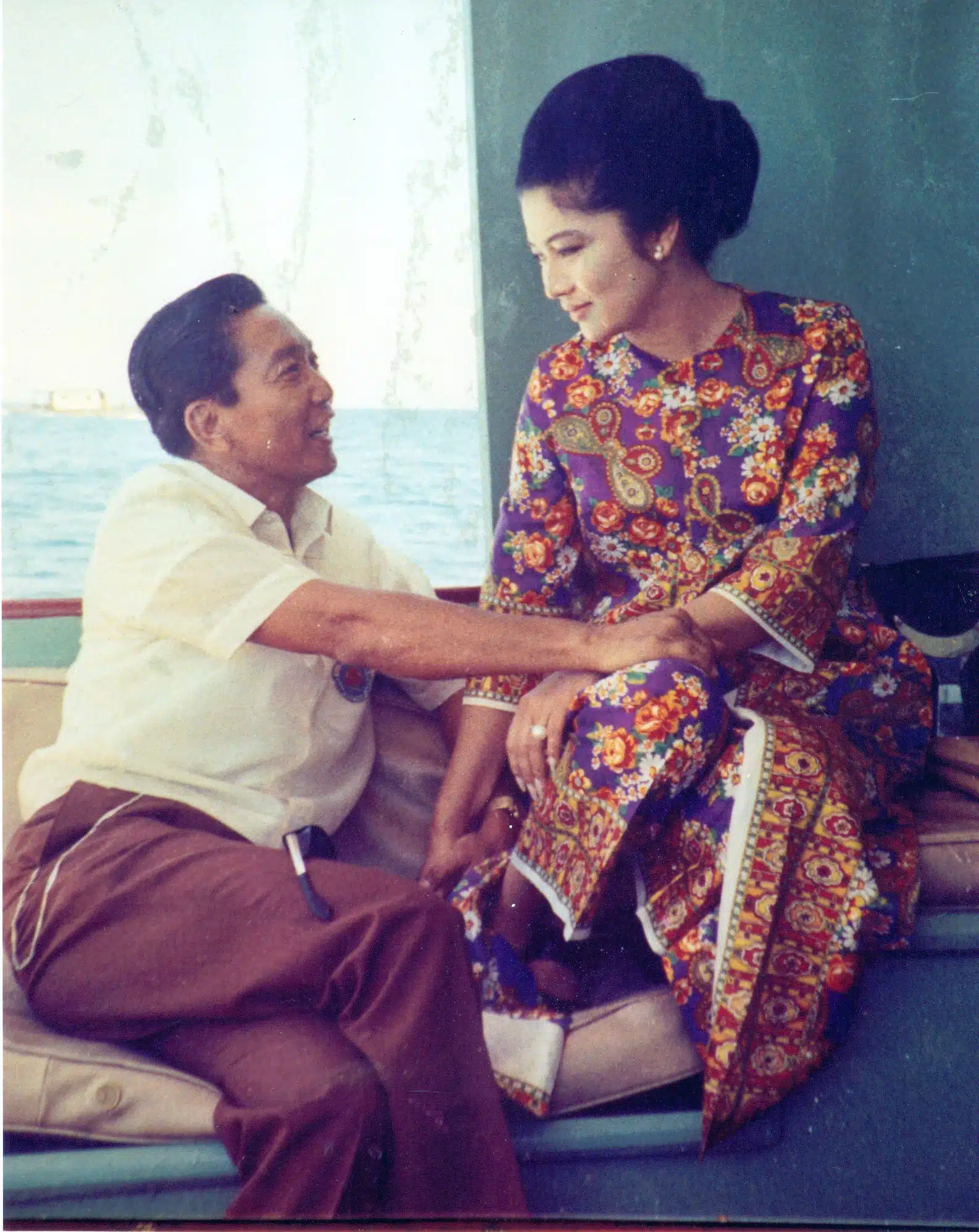
Imelda Marcos’ name is not far behind Ferdinand Marcos, the president who implemented the infamous Martial Law of 1972. She is not just known because she is the wife, but she made a name for herself for some controversial reasons as well.
With that, let’s go back to the beginnings of Imelda. Before marrying Ferdinand, she was Imelda Romualdez born on July 2, 1929 in San Miguel district of Manila. Her father is a lawyer and the Romualdez side of her family are politicians that hail from Leyte.
Imelda came from an affluent family but the financial troubles started between 1931 to 1932. In 1938, her father finally decided to pack up his law practice in Manila and bring back the family to Leyte.
She would go on with her studies in Leyte and she returned back in Manila in 1952, living with a relative – Danieling Romualdez, a politician from the Lower House of Congress that time.
Imelda would then join the controversial Miss Manila contest in 1953. She was not the declared winner at first, but later the decision was revoked and it was awarded to Imelda.
The following year, 1954, she and Ferdinand Marcos will meet for the first time. It was during a budget hearing in the Philippine Congress and she was there along with a cousin to visit Danieling.
Imelda apparently caught Ferdinand’s eye but he was already aware of who she was. He knew that Imelda is from the political clan of the Romualdezes and from her controversial Miss Manila awarding.
Ferdinand asked his friend and a journalist from the Manila Times, Jose Guevara for an introduction. Despite Marcos’ own controversies, Imelda didn’t know much about him that time.
They met on April 6, 1954 and got married quietly on April 17, 1954. To say that it was a whirlwind romance is an understatement, they got married 11 days after their introduction.
Eventually Ferdinand would run for presidency. Imelda held an important role in helping Ferdinand reach his goal. Marcos was intelligent and a strategist but Imelda was also popular and had her way with people.
Undeniably she is charismatic, popular, determined and knows how to reach out to people. People that would be important in supporting Ferdinand in becoming president. She was the one who convinced Fernando Lopez to be Marcos’ running mate (his vice president).
She established important ties for the both of them. They were more than husband and wife, Imelda is also a political partner to Marcos. As we all know, Marcos won and this established her as the First Lady of the Philippines that time.
With their ascendancy in the political arena, Imelda’s love for beautiful and luxurious things showed. Imelda liked socializing here in the country and abroad. She would even include her Blue Ladies* in her trips.
Because she loved socializing, Imelda purchased plenty of gowns, handbags, jewelries, and the infamous collection of shoes. Even when they fled the Philippines after the snap election of 1986, among their cargo were 24 gold bricks which was her gift to Ferdinand on their 24th anniversary.
Imelda Marcos is not as faultless as she claims. How could she have spent so much when Marcos’ annual salary never went beyond $13,500 per year? She is the woman behind the man, Ferdinand. And she’s also behind a lot of grievances against the Filipino people.
*Blue Ladies – Fellow women, mostly wives of other politicians from the Nacionalista Party. Formed during the presidential campaign, and these women helped Imelda in campaigning.
Sources:
Nick Davies, “The $10bn question: what happened to the Marcos millions?,” https://www.theguardian.com/world/2016/may/07/10bn-dollar-question-marcos-millions-nick-davies, (May 7, 2016).
“Imelda Marcos,” https://www.britannica.com/biography/Imelda-Marcos.

by MLC | Apr 18, 2018 | Martial Law Analysis
Ferdinand Marcos will be remembered for a lot of reasons. One significant event would be the Martial Law of 1972. It would be remembered in decades to come and would be subject to a lot of controversy.
The Martial Law brought about reports on abuse, torture, and human rights violation. In theory, it should have protected the nation, but laying down the facts and figures – it clearly did not.
How did this man came into power? How did he do it?
Ferdinand Marcos has a combination that would get him far in the political arena. His intelligence is known and legendary to some. He finished law in the University of the Philippines and topped the board exam of 1939.
He also had political connections. He came from a powerful political family in Ilocos. And this would be instrumental in establishing him as a politician. Marcos didn’t become President of the Philippines in one day.
He knew he had to climb the ladder, and being the president was his goal even before he was a congressman. He joined the House of Representatives, the Senate, and finally got elected to Presidency. He started his political career in 1949 as a congressman and became the president in 1965.
He also had a political partner – not just his wife but helped him rose through presidency, Imelda Marcos. Imelda is beautiful, charismatic like Ferdinand also, and came from a political clan as well. And she had people skills, she knew how to build bridges and establish important connections to put Ferdinand forward in the political race.
Marcos is also a tactician. He understood the power of strategy and it landed him the presidency for 21 long years. He declared Martial Law to get himself more power and even extend his presidency.
Martial Law even gave him more access to the coffers of the country also. Marcos just didn’t increase his wealth by simply taking money. As mentioned earlier, his brilliant mind is both his strength and his weakness. He wanted to extend his time of rule in the country and more wealth, so he was able to strategize how. Greed got the best of him.
Marcos understood the power of monopolies. So gathering the biggest industries in the country – banana, coconuts, tobacco, sugar and manufacturing, he placed them under monopolies and assigned his cronies to direct and control them.
Taxes were imposed on coconut farmers during the 70s and this fund, known as the coconut levy fund was used to fund Marcos’ other investments. Marcos dabbled in stocks, knowing that the value of it will increase in time.
He chose well where to purchase stocks, he used his dummy firms to purchase to avoid having direct links to the shares. Marcos bought shares from San Miguel Corporation, PLDT, and MERALCO to name a few. These companies are still sizeable up to know.
The man behind the Martial Law had the potential to be a great leader of the country. However, the temptation to be more in power, to be greater in wealth took over. Even if it means putting the lives of the Filipinos on the line.
Lives were taken unnecessarily, people were tortured, and brazenly robbing the country. Such a shame that a man who could have lead the country to greater heights succumbed to greed.
Sources:
Mynardo Macaraig, “5 questions on the dictator Ferdinand Marcos,”
http://news.abs-cbn.com/news/11/08/16/5-questions-on-the-dictator-ferdinand-marcos, (November 8, 2016).
Ana Roa, “Regime of Marcoses, cronies, kleptocracy,” http://newsinfo.inquirer.net/641277/regime-of-marcoses-cronies-kleptocracy, (September 29, 2014).
