by MLC | Apr 14, 2010 | News
By Jerrie Abella
Source: GMA News
The Philippines’ martial law victims scored a double victory in US and Singapore courts, boosting their claim for indemnification for human rights abuses they suffered under the Marcos dictatorship.
These two decisions came nearly two decades after a Hawaii court first ruled in their favor, which entitled them to almost $2 billion damage claims.
The US Fifth Circuit Court of Appeals ruled in an April 5 decision that a class judgment against the Marcos estate was enforceable both in Illinois and Texas courts.
The ruling affirmed a 2005 decision of the Hawaii District Court against the Marcos estate valued at $150 million.
It likewise reversed a decision of the Northern District Court of Texas, which stated the Hawaii court ruling may not be enforced in Texas as the judgment has expired before it was registered in that state.
“The court ruled that the class judgment of the Hawaii District Court against the Marcos Estate was valid in Illinois and was properly transferred to Texas,” said Robert Swift, the American counsel for the 9,539 victims, in reports.
4,000-acre property
The property in question was the 4,000 acres of land in Texas the titles of which are held by the Marcos estate and several other companies controlled by the Campos and Tan families.
The companies named as defendants in the US case are B N Development Co. Inc., Ellesmere Investment Corp. Inc., Jason Development Co. Inc., Langley Investment Corp. Inc., Pender Investment Corp. Inc., Revelstoke Investment Corp. and Vernon Investment Corp. Inc.
According to Swift, the Texas ruling was being used by the Philippine government, the Philippine National Bank, and the defendant companies in court proceedings in other jurisdictions to disallow human rights victims to purse the case against Marcos coming from the Hawaii court decision.
“For the past two years, the Arroyo administration, the Presidential Commission on Good Governance, the Office of the Solicitor General, the Philippine National Bank (PNB) and the Campos family viciously attacked the class victims’ judgment… They and their ‘experts’ should feel deep shame and remorse for the harm they caused the victims,” Swift said.
The class victims similarly won a separate victory in a Singapore court, which currently hears a $28-million litigation.
Justice Kan Ting Chiu in an order issued last week rejected the demand of the Philippine government and the PNB for a list of names and addresses of all the claimants in the class suit.
“The only purpose for demanding such list is retaliation by military and para-military groups who first abused these victims during the Marcos regime. No one should underestimate the vindictiveness of the current administration,” Swift said in the same statement.
1992 decision for indemnification
The US Federal Court of Hawaii ruled in 1992 for the indemnification of victims amounting to $2 billion.
Apart from the 4,000-acre real estate, the properties and monies identified by the court as the source of the indemnification are the $680-million Swiss account of the Marcoses and the $35-million Arelma being claimed by the government along with the Singapore account.
“The (US) court decision is not only a victory for the victims; it is also a victory for the Filipino people. It is high time that the victims be compensated. This compensation is not just about money; it is part of getting justice,” said Marie Hilao-Enriquez, secretary general of SELDA (Society of Ex-Detainees and for Liberation against Detention and for Amnesty), an organization of former political detainees.
At least 120,000 Filipinos were detained under the Marcos dictatorship, according to SELDA.
Over 9,000 subsequently filed a class action suit for crimes against humanity against the Marcoses before the US Federal Court System in 1986, which they eventually won in 1992.
The human rights violations stemmed from the military rule in 1972 declared by then President Ferdinand Marcos, who was deposed in 1986 through a people’s uprising. Marcos died in exile in Hawaii in 1989.
SELDA thus urged the Marcoses, particularly senatorial candidate Ferdinand “Bong-bong” Marcos Jr., to honor the recent US court decision and cooperate in the speedy compensation of the victims.
“We dare the Marcoses, who want to have a comeback in Philippine politics, to willingly execute the judgment, that is, if they truly want to serve the Filipino people. Show to us that you truly are against corruption by posing no objection to this recent court ruling,” Enriquez said.

by MLC | Sep 22, 2009 | News
By Winnie Monsod
Source: GMA News
(Following is the transcript of the segment “Analysis by Winnie Monsod” which aired on News on Q on September 21, 2009. Prof. Winnie Monsod is the resident analyst of News on Q which airs weeknights at 9:30 p.m. on Q Channel 11.)
Thirty-seven years after its imposition, and twenty three years after our liberation from the dictatorship that ensued, the Philippines still is haunted by the Pandora’s box that martial law opened.
One among the major problems that found full flower during Martial Law and continues to flourish up to now is corruption.
This is not to say that corruption was non-existent before Martial Law, but the dictatorship brought it to heretofore unscaled heights to the point that Mr. Marcos ranks second only to Indonesian President Mohammed Suharto in the list of the World’s Ten Most Corrupt Leaders compiled by Transparency International in 2004 – and he was second only because Mr. Suharto was dictator for 31 years to Marcos’ 14.
It is estimated that in those 14 years, Mr. Marcos allegedly embezzled between $5 to $10 billion dollars from the country.
By the way, Mr. Estrada was in 10th place – making ours the only country with two leaders in the world’s 10 most corrupt leaders list.
Now we are in the bottom 10th to 25th percentile as far as corruption is concerned – that is to say, only 10 to 25 percent of the countries in the world are considered more corrupt than we are.
The second unfortunate legacy is the politicization of the military – their encroachment into civilian life, the blurring of the civilian-military divide.
The practice of appointing military officers to civilian posts started during the Marcos dictatorship, when he would appoint officers still on active military duty to occupy civilian posts simultaneously.
The Asian Political News of August 26, 2003 reports that during her term, President Cory Aquino pressed into civilian service 22 retired military officers; President Fidel Ramos appointed more than 100 of them; even President Estrada, during his truncated presidency appointed at least 18, and President Arroyo, since 2001, had appointed 80 to 100.
Moreover, since 1987, more than 50 former military men have run for political office.
The third legacy of Martial Law that still has not achieved closure has to do with the human rights violations that saw thousands of life damaged, destroyed, or lost.
According to the estimates of historian Alfred W. McCoy, 70,000 Filipinos were incarcerated for political reasons during the martial law regime, of whom 35,000 were tortured.
McCoy also lists 3,257 extra-judicial killings, of which 77 percent, or 2,520 were the victims of “salvaging.” Add to this the 737 desaparecidos – Filipinos who just disappeared from the face of the earth.
Although human rights victims had been awarded $1.9 billion in exemplary and compensatory damages by a US court, and although the Swiss government had turned over to the Philippine government in 1997 about $624 million dollars from Marcos deposits in Switzerland.
The sad fact is that the Philippine legislature has yet to pass the bill awarding them compensation and as of now there seem to be two groups claiming to speak for these victims – SELDA and Claimants 1081. This division between the victims has probably resulted in more delay.
Like world-class corruption and the politicization of the military, human rights violations like extrajudicial killings, and torture still seem to be part of the modus operandi of our military – with the implicit approval of the executive branch of government.
In June 2006, bonnet-wearing armed men forcibly took UP students Karen Empeno, 22 years old, and Sherlyn Cadapan, 29 years old, and a local farmer in Hagonoy, Bulacan.
Both students were doing research on Central Luzon farmers at that time and Cadapan was reportedly pregnant then.
Until now, the two women are nowhere to be found.
Melissa Roxas is luckier. She was released after six days of mental and physical torture in what she believed was a military camp.
She and two others were abducted in Tarlac just last May while conducting research for a future medical mission in the area.
And, just last month, the Court of Appeals ruled that Melissa’s claims of abduction and torture are “factual and true,” and granted the victim’s petition for a writ of amparo.
Actually between 2001-2007 there have been 834 victims of extra-judicial killings.
So now that we see how insidious and long-lasting the effects of martial law have been, where its consequences is still reverberating to society and economy is there a possibility that it might happen again?
Here, at last, we can end on a hopeful note. The answer is that it is highly unlikely.
Firstly, there are enough safeguards in the 1987 Constitution against its imposition a la Marcos.
And even more importantly, survey after survey show that the Filipino people are adamantly opposed to it, and do not think that it is the answer to our problems. The same is true for international public opinion.
Never again.
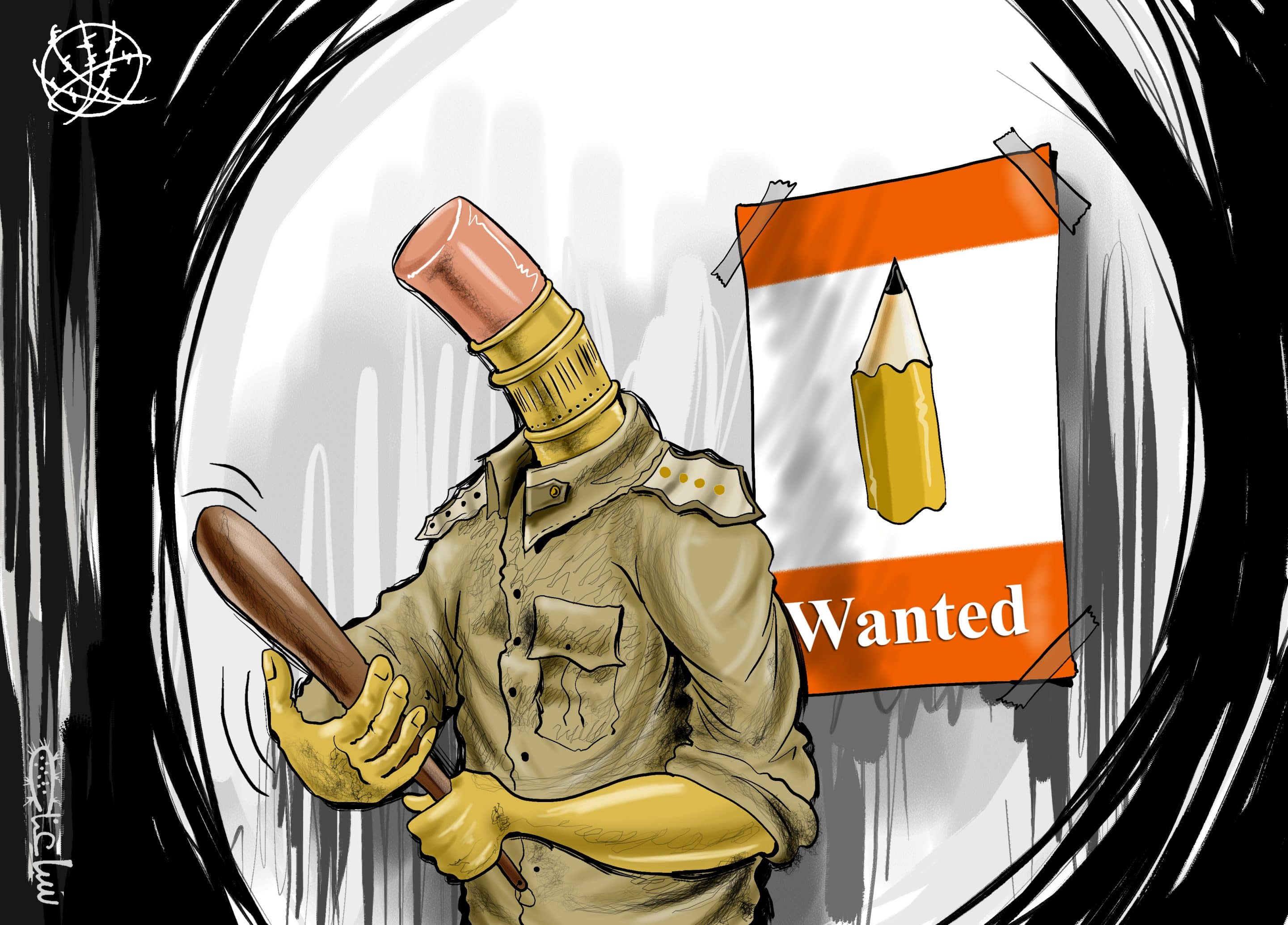
by MLC | Sep 1, 2007 | News
Source: CMFR
A timeline of press freedom
Back to the Past
By Jose Bimbo F. Santos and Melanie Y. Pinlac
IN TODAY’S fast-moving world, 35 years can be a very short time. It was not long ago that Ferdinand Marcos declared martial law and put a stop to freedom of the press. But not many Filipinos remember that anymore. And that is why we look back at what have transpired since then. In doing so, we may come out with a chilling realization: how close—how dangerously close—we are to the past.
September 21, 1972 – Ferdinand Marcos signs Proclamation No. 1081 placing the country under martial law.
September 22, 1972 – Through Letter of Instruction no. 1, Marcos orders the closure of media establishments like Manila Times; Daily Mirror; Manila Chronicle; Manila Daily Bulletin; Philippine Daily Express; Philippines Herald; Philippine Free Press, Graphic; and the Nation as well as wire agencies.
September 23, 1972 – Media and opposition personalities known to be critical against Marcos are taken to military camps for investigation and detention. The series of interrogation of the media by the military intelligence begins.
September 25, 1972 – The Department of Public Infor-mation (DPI) issues Order No. 1 requiring all media publications to get a clearance from the DPI, and Order No.2 which prohibits printers “from producing any form of publication for mass dissemination without permis-sion from DPI.” On this day, the Philippine Daily Express restarts publication.
October 28, 1972 – Marcos issue Presidential Decree (PD) 33 which “penalizes the printing, possession, and distribution of leaflets and other materials, and even graffiti which ‘undermine the integrity of the govern-ment.’”
November 2, 1972 – Marcos issues PD No. 36 canceling the franchises and permits of all mass media facilities allegedly trying to topple his government. The decree creates the Mass Media Council which has the power to grant certificates of authority to newspapers, radio, and TV.
January 6, 1973 – Marcos issues PD 90 penalizing rumor-mongering. Rumor, according to the decree, is “false news and information and gossip which undermines the stability of government.”
May 11, 1973 – Marcos issues PD 191 abolishing the Mass Media Council and creating the Media Advisory Council.
1974 – The Foreign Corres-pondents Association of the Philippines is formed to protect the rights of journalists working for foreign-based news agencies. Like local journalists, foreign correspondents undergo censorship. In an interview with PJR Reports, former New York Times correspondent Alice Colet Villadolid says they go to Malacañang everyday to have their articles checked and approved by the Office of the Press Secretary.
November 9, 1974 – PD 576 abolishes the Media Advisory Council and the Bureau of Standards for Mass Media. But, on November 11 of the same year, Marcos authorized the organization of regulatory councils for print and broadcast media through PD 576-A. The Philippine Council for Print Media and the Kapisanan ng mga Brodkaster sa Pilipinas were formed.
February 3, 1976 – Marcos issues PD 885 forbidding the creation of “subversive” organi-zations. It included “preparing documents, leaflets and any other types of publication, and advi-sing and counseling members of “subversive” organizations” as among the punishable acts. The penalty for crimes against public order is increased through PD 942.
January 28, 1977 – Marcos issues PD 1079, a decree “Revising and consolidating all laws and decrees regulating the publication of judicial notices, advertisements for public biddings, notices of auction sales, and other similar notices.”
June 11, 1978 – Marcos issues PD No. 1498 or the National Security Code.
September 12, 1980 – Marcos issues PD No 1737 or the Public Order Act. This “ empowered him to issue orders as he may deem necessary” in order to clamp down on “subversive publications or other media of mass communication” and “ban or regulate the holding of entertainment (or exhibitions) deemed ’detrimental to the national interest.’” Under this, he was also ”empowered to order the preventive detention of persons and to prohibit the wearing of certain uniforms or emblems.”
October 8, 1980 – Marcos issues PD No. 727 making “unlawful the malicious dissemination of false information.”
January 17, 1981 – Marcos issues Proclamation No. 2045 “lifting” martial law.
January 23, 1981 – The government abolishes the print and broadcast media councils. The right to publish without having to obtain prior license was restored.
March 9, 1982 – Marcos issues Letter of Instruction No. 1211. Called the Presidential Com-mitment Order, the presidential issuance allows the “preventive detention” of persons for crimes mentioned in PD No. 2045.
December 2, 1982 – Marcos orders the seizure of We Forum after it came out with a series exposing his fake medals.
July 21, 1983 – The Presidential Commitment Order was replaced by Preventive Detention Action. Marcos issues PD 1875 repealing the Public Order Act, and PD 1876 repealing the National Security Code. 4
July 25, 1983 – Marcos issues PD 1835 or the Anti-Subversion Law of 1981, “increasing the penalties for membership in subversive organizations from life imprisonment to death.”
August 20, 1983 – Women Writers in Media Now hold a consultation on press freedom.
August 21, 1983 – Former senator Benigno Aquino Jr. is assassinated upon his return to Manila.
September 29, 1983 – Pro-perties of the Philippine Times were seized after it published a story implicating high government and military officials in the assassination of Ninoy Aquino.
Mid-1985 – The New York-based Committee to Protect Journalists announces that a total of 12 journalists were killed since 1984. The National Press Club, on the other hand, says that 19 were killed and one has been missing since 1976.
February 7, 1986 – Snap elections are held.
February 22, 1986 – People Power begins and ends peacefully after four days.
February 25, 1986 – Marcos flees to Hawaii. Corazon Aquino takes power.
February 28, 1986 – The Aquino government issues Executive Order (EO) No. 1 creating the Presidential Commission on Good Government which was tasked to go after the alleged ill-gotten wealth of the Marcos family.
March 2, 1986 – President Aquino lifts the suspension of the priviledge of the writ of habeas corpus.
July 16, 1986 – EO No. 29 repealed PD No. 33, the decree “Penalizing the Printing, Possession, Distribution and Circulation of Certain Leaflets, Handbills and Propaganda Materials and the Inscribing or Designing of Graffiti.”
December 17, 1986 – Malacañang issues E.O. No. 92 expanding the responsibility and authority of the Office of the Press Secretary. Through this order, the Bureau of National and Foreign Information and all its subsidiary offices, the Radio and Television Malacañang, the Presidential Press Staff and its sub-offices, the People’s Television 4, and the Radyo ng Bayan are placed under the control of the OPS.
December 24, 1986 – The Aquino government forms the Philippine Information Agency after the abolition of the Office of Media Affairs.
1987 – The Philippine Press Institute is re-established after its operation was halted during martial law.
June 5, 1987 – President Aquino issues EO No. 187 repealing the Marcos-issued PD 38 (“Amending Articles 135, 136, 137, 138, 140, 142, 177, 178 and 179 of The Revised Penal Code”), 942 (“Amending the Provisions of the Revised Penal Code on Crimes Against Public Order), 1735 (“Imposing Additional Penalties for Rebellion, Insurrection, Sedition, and Subversion Committed Within or Outside Philippine Territoy”), 1834 (“Increasing The Penalties For The Crime of Rebellion, Sedition, and Related Crimes, and Amending For This Purpose Articles 135, 136, 140, 141, 142, 143, 144, 146 and 147 Of The Revised Penal Code and Adding Section 142-B Thereto”), 1974 (“Amending Presidential Decree No. 1834”), and 1996 (“Further Amending PD No. 1834 as Amended”) and Articles 142-a and 142-b of the Revised Penal Code.
October 1987 – President Aquino files a libel suit against journalist Luis Beltran for writing in his column that she “hid under the bed” while government troops were battling mutineers in August 1987. On October 22, 1992, Beltran and Soliven were convicted of libel, but the decision was reversed by the Court of Appeals on July 12, 1993.
1988 – The PPI and the National Press Club adopt the Journalists’ Code of Ethics.
December 3-4, 1989 – The National Telecommunications Council orders the closure of two radio stations, dzEC and dyLA, for “airing rebel propaganda and disinformation in violation of franchise rule.” The stations provided space and time to military rebels who staged a coup on December 1989. The orders were lifted on December 11 and 13, respectively. In the same year, the NTC issued Memorandum circular no. 22-89 revising Memorandum circular no. 11-12-85 “governing program standards of the broadcast media,” but it was later lifted.
December 6, 1989 – The Aquino government declares a state of National Emergency due to attempts to topple her govern-ment.
July 5, 1991 – Republic Act (RA) 7079 or the “Campus Journalism Act of 1991” is enacted.
October 21, 1991 – The Philippine National Police issues a secret directive. It aims to form a media research project, “Oplan Malunggay,” to classify which mass media personalities and institutions are friendly or critical to the agency. On December 13, the Manila Chronicle runs a series on the directive. The PNP, however, denies that such an order was issued.
September 22, 1992 – President Fidel V. Ramos signs RA 7636 repealing RA 1700, otherwise known as the Anti-Subversion law. RA 1700 was signed into law on June 20, 1957 by then President Carlos P. Garcia to combat communism, which was popular during the Cold War, declaring groups like the “Hukbalahap” as illegal. The law was also used to curb criticism against the government, and other published materials during the Marcos dictatorship that discussed the revolution.
March 9, 1999 – President Joseph Estrada files a P101-million libel suit against The Manila Times for the paper’s Feb. 16 banner story which described him as an “unwitting ninong (godfather)” to a P17-billion power contract between an Argentine firm and the National Power Corp. The Times published a front-page apology by publisher Robina Gokongwei-Pe on April 8. The following day, Estrada announced the withdrawal of his libel suit against the newspaper. The apology led to the resignation of editors Chit Estella, Booma Cruz, Ed Lingao and Joel Gaborni. (Estalla
July 10, 1999 – Movie advertisements withdraw from the Philippine Daily Inquirer, two days after Estrada met with his businessmen friends and film industry bigwigs. Other government institutions and state-run companies also joined the ad boycott, which lasted until late November. The Inquirer’s palace reporter was excluded from media’s meetings with Estrada. Then Press Secretary Rodolfo Reyes cited “the Inquirer’svery biased reporting” as reason for the ban.
July 22, 1999 – Media report the sale of The Manila Times to lawyer Katrina Legarda and businessman Reghis Romero III for P20 million. The next day, the Times announced that it was ceasing publication. When it reopened, the new owner was identified as Mark Jimenez, a known ally of Estrada.
September 15, 1999 – The Supreme Court reverses the Manila Regional Trial Court and the Court Appeals’ conviction for libel of Rodolfo Vasquez, spokesperson for 38 families who were evicted from the Tondo Foreshore area in 1986. Vasquez was sued by barangay captain Jaime Olmeda, who was accused of landgrabbing and other illegal activities. The high court, in a landmark decision, established that truth is a defense against libel.
September 6, 2003 – Juan “Jun” Pala, is assassinated in Davao. He was the seventh journalist casualty this year, a number not seen since the 1980s.
September 10, 2003 – Unesco Director-General Koïchiro Matsuda condemns the killing of journalists in the Philippines.
December 2003 – The Brussels-based press freedom organization International Federation of Journalists releases its annual report, with the Philippines ranking with Colombia as the most dangerous country for journalists next to Iraq.
2004 – The killing of journalists continues, with the country figuring prominently in the annual reports of international press freedom organizations that list the most dangerous places for journalists worldwide. There were 11 reported cases of journalist killings at the end of 2004. Center for Media Freedom and Responsibility (CMFR) research later indicated that there were actually 15 killings, 8 of which were work-related. The Arroyo government also created Task Force Newsmen to address the crisis.
April 1, 2005 – The National Union of Journalists of the Philippines reports the existence of a military document titled, “Knowing the Enemy,” which identified them along with the Philippine Center for Investi-gative Journalism (PCIJ) as two of several “fronts” of the Communist Party of the Philippines (CPP) and its armed wing, the New People’s Army (NPA). The document was reportedly prepared by the Intelligence Service of the Philippines of the Armed Forces of the Philippines. Then Armed Forces spokesman Brig. Gen. Jose Honrado however said that the document merely showed “organizations which are targets of infiltration by the CPP-NPA.”
September 26, 2005 – President Gloria Macapagal Arroyo issues EO 464 prohibiting senior executive and military officials from appearing in Congress without the President’s permission. The executive order was issued in the wake of the “Hello Garci” controversy and a week after National Security Adviser Norberto Gonzales appeared in a Senate hearing regarding the P50-million contract of the government with the Washington-based law firm Venable LLP as lobbying consultants. The timing of its release was thus seen as part of the attempt to prevent information on both issues from reaching the public. EO 464 was partly upheld by the Supreme Court in a decision on April 2006. But the Court noted that “[executive] privilege being, by definition, an exemption from the obligation to disclose information, in this case to Congress, the necessity must be of such high degree as to outweigh the public interest in enforcing that obligation in a particular case.”
November 29, 2005 – Judge Ramon Codilla of the Cebu City Regional Trial Court finds Police Officer Guillermo Wapile guilty of killing journalist Edgar Damalerio who was murdered on May 13, 2002.
February 24, 2006 – Arroyo issues Presidential Proclamation 1017, placing the country under a state of national emergency. The administration also issues guidelines for the media prohi-biting news and commentaries that are “subversive” and warns that the government was closely monitoring the press.
February 25, 2006 – The police raid the office of the Daily Tribune, getting copies of news reports and photos from the publication’s editorial office “because it was a possible source of destabilization materials.”
March 6, 2006 – President Gloria Macapagal Arroyo issues EO 511 creating a communications group that will “guide, integrate, and supervise the public information activities, including advertisements, of all departments and agencies of the executive branch of government, including government-owned and -controlled corporations.” EO 511 raised alarm among the media because of its resemblance to former President Estrada’s attempt to control the press by controlling government ad placements.
May 3, 2006 – The Supreme Court (SC) declares the government raid on the Daily Tribune illegal and constituting “plain censorship.” While also declaring the constitutionality of Presidential Proclamation 1017 in so far as upholding Arroyo’s power to declare a state of national emergency is concerned, it ruled as illegal the Arroyo government’s decision giving itself the authority to issue decrees and raid or take over privately owned media.
May 13, 2006 – Interior secretary Ronaldo V. Puno orders the creation of Task Force Usig to investigate the killing of members of militant groups, government officals, and journalists.
August 13, 2006 – Amnesty International (AI) says the Arroyo administration failed “to fulfill its obligation to protect the right to life of every individual under its jurisdiction, regardless of the political affiliation of those targeted.” AI adds: “No one deserves to die for his political affiliation. It should be a deep embarrassment to the government that people in the Philippines cannot freely exercise their rights of political expression and association.”
August 21, 2006 – GMA issues Administrative Order No. 157 creating a five-man commission headed by former SC Justice Jose Melo to investigate, examine policy matters, recommend reforms and consolidate efforts to mete out justice on cases of extrajudicial killings.
September 18, 2006 – Christopher Warren, International Federation of Journalists president, describes as “outrageous” the number of libel suits (10 suits against 45 journalists) filed by Jose Miguel “Mike” Arroyo, husband of Mrs. Arroyo, against the press .
September 12, 2006 – The Melo Commission starts its probe into the spate of killings of activist leaders and journalists.
October 6, 2006 – Gerry Cabayag, Randy Grecia, and Estanislao Bismanos are convicted by Judge Eric Menchavez of Cebu City Regional Trial Court for the March 24, 2005 killing of Marlene Esperat in Tacurong, Sultan Kudarat.
December 28, 2006 – Journalists and press organizations, including the CMFR, the PCIJ, and the Daily Tribune, filed a class action suit in response to the numerous libel suits that presidential spouse Mike Arroyo filed against members of the press.
January 22, 2007 – The Melo Commission submits its report to President Arroyo. It says, among other things, that while the AFP does not have a policy for the illegal liquidation of persons, “there is certainly evidence pointing the finger of suspicion at some elements and personalities in the Armed Forces, in particular Gen. Palparan, as responsible for an undetermined number of killings, by allowing, tolerating, and even encouraging the killings.”
February 11, 2007 – Philip Alston, UN Special Rap-porteur for extrajudicial killings, arrives for a ten-day fact-finding mission. Alston was accompanied by UN experts Ulrich Grams, who had investigated war crimes in Bosnia, and William Abresch, who had investi-gated human rights violations in Chechnya.
February 15, 2007 – Both the EU and UN Special Rapporteur Philip Alston have asked the Palace for a copy of the Melo report. Malacañang however refused to furnish the EU and UN a copy, saying that the report was still incomplete.
February 21, 2007 – Alston releases a preliminary statement at the end of his ten-day investigation, saying that the Armed Forces of the Philippines is in “a state of denial” regarding its role in extrajudicial killings and other human rights violations.
February 22, 2007 – Mrs. Arroyo finally releases the Melo report to the public.
March, 5 2007 – The Supreme Court issues Administrative Order No. 25-2007 designating 99 regional trial courts as special tribunals with orders to resolve cases of extrajudicial killings in 90 days and warning that delays would be punished.
March 6, 2007 – President Arroyo signs into law RA 9372, also known as the Human Security Act of 2007 or the Anti-Terror Law.
March 12, 2007 – The UN Human Rights Committee in Geneva starts its investigation into extrajudicial killings in Philippines. In the US, Eric John, US deputy assistant secretary of state for East Asian and Pacific Affairs, tells a US Senate sub-committee that Mrs. Arroyo must bear the blame for the increasing attacks on people speaking out against her administration.
March 25, 2007 – The Permanent Peoples’ Tribunal in The Hague, Netherlands finds Gloria Macapagal Arroyo and the Philippine government guilty of “crimes against humanity” in connection with charges of extrajudicial killings, abductions and disappearances, massacres, and torture committed against civilians.
March 26, 2007 – Manila Archbishop Gaudencio Cardinal Rosales says the extrajudicial killings and other abuses that have occurred during Mrs. Arroyo’s six-year presidency are a ”mere speck of blood” compared to the number of political murders and human rights violations committed during the term of Ferdinand Marcos.
March 27, 2007 – United Nations Special Rapporteur Philip Alston presents to the UN his findings regarding the spate of extrajudicial killings in the Philippines and accuses the government of “passivity, bordering on an abdication of responsibility” in the matter of protecting human rights.
April 20, 2007 – President Gloria Macapagal Arroyo issues EO 608 restricting public and media access to official information. The EO creates the National Security Clearance System to “protect and ensure the integrity and sanctity” of classified information against “enemies of the state.”
REFERENCES:
“Inside the Timeline,” Media Museum of the Philippine Communication Centrum (http://www.aijc.com.ph/PCCF/mediamuseum/timeline/timeline-main.htm)
Ofreneo, R. (1986). The Manipuated Press: A History of Philippine Journalism since 1945, 2nd ed.; Solar Publishing, Mandaluyong, Metro Manila
Philippine Journalism Review, Center for Media Freedom and Responsibility.
Teodoro, L. & Kabatay, R. (2006). Mass Media Laws and Regulations in the Philippines, 3rd ed.; Philipine Graphic Arts, Inc. Caloocan City
The LawPhil Project. Arellano Law Foundation (http://www.lawphil.net/)
Villadolid, A. (2005). Featuring The Philippine Press: 1637 to 2005; Quezon City, Philippines

