“I was one year away from college graduation when Martial Law was declared. That morning before school, we woke up and there was nothing to listen to on the radio as we dressed up for school. Neither was there anything on TV.
In a corridor at the Ateneo, I saw some classmates had gathered. We were all wondering what was happening. It seemed like everyone was in a daze or in a state of fear.
Soon enough, some priests and administration officers told us that Martial Law had most likely been declared. Even if there was no media announcements yet, we were all sent home.
That evening, I watched Kit Tatad announce on TV that the Philippines was already under Martial Law. I felt that a long darkness had descended upon the country.
The weeks that followed are still vivid in my mind.
I saw with my own eyes how the military controlled everything. As a student, I saw soldiers stop buses and order people with long hair to come down.They were given instant haircuts. Why? Because they looked like hippies and subversives.
Some were picked up and put in military vehicles and brought to camps or safe houses for ‘questioning’. Some were tortured. Some were killed. Some disappeared without a trace.
Social life was heavily curtailed with curfews, checkpoints, and the presence of military and police everywhere. We had to be home by 12 midnight every night.
If you were caught on the road during curfew hours, you would be brought to Camp Crame and you had to cut grass the next morning.
If you were well-connected, however, you could get curfew passes which allowed you to be out in the streets at night. People were afraid.
Every hour on radio, you could hear the gravelly voice of actor Vic Silayan saying, “Sa ika-uunlad ng Bayan, disiplina ang kailangan.” It was brainwashing.
I remember APO performing at St Mary’s College a few months after Martial Law. Everyone was having a good time. All of a sudden, the police came and ordered the concert closed.
Everyone in the auditorium was asked to join one of the two lines. Those with long hair were told to join the line on the left side.
Those with regular length hair, lined up on the right side. As we walked out of the concert hall, police and a few agents dressed as civilians looked at each one of us in the eye. They decided right then and there who they branded as drug addicts, pushers, and ‘dangerous’.
Danny was unfortunately told to get out of line and join the ‘criminals.’ He explained that he was there as a singer and, somehow, they decided to let him go. The rest were brought to Camp Crame.
The next few weeks and months, we heard that some classmates and people we knew had gone missing and joined the underground. Some were tortured and/or jailed just because they were activists.
Many were killed. I had at least 3 classmates who died or disappeared, and a few more jailed and tortured under the custody of the military.
I spent almost two decades of my life under the Marcos dictatorship. During those times, very few stood up against the regime. People mostly gave the Marcos dictatorship a chance in the beginning.
For a young man like me, I knew many wrong things were going on. People were being killed or kidnapped by the authorities. Human rights were violated. There was a climate of fear.
Within 2 years, people in power were already blatantly lording it over businessmen and stealing their companies, or extorting them.
New owners of media became little ‘gods’ who made sure that media promoted the ‘New Society’ that Marcos’ martial law was being touted as. Media was full of sycophants and traitors. People would not say anything critical to the government on air.
Despite the strict control of media, and the absence of social media and cellphones back then, word got out about how abusive the regime was becoming. People were slowly but surely becoming more and more informed and courageous.
Soon, there were small rallies despite the ban on assemblies and protests. Dangerous as rallies were, the crowds grew bigger and bigger with every scandal and abomination the dictatorship foisted on us.
It was, however, the assassination of Ninoy that eventually became the catalyst that forced Marcos to call for snap elections. The rest, as all of us know, is history.The day we won in EDSA, I promised myself that I would never again allow a dictator to rule over me.
I know many other people made that promise, too. It has been a number of decades since. And here we are, once again, being challenged by another dictatorship.
But a promise is a promise. And through hell or high water, I know many of us intend to keep it. Push is more and more coming to shove. Sorry na lang sa dictator!”
I come from a lost generation known as the “martial law babies.” I was 4 years old when Ferdinand Marcos became president in 1965, 11 when martial law was declared in 1972, and 24 when the 1986 People Power Revolt drove him to exile and eventual death in Hawaii.
I came of age knowing no other president but Marcos. I thought he came with Malacañang’s tacky, gold-painted, heavily carved, high-back chairs. His picture and initials “FM” were the staple in the front pages of the Bulletin and Daily Express.
He dominated the 6 o’clock and 10 p.m. TV news, too. His speeches often interrupted regular programming, and when this happened, your only option was to switch off the TV set because all five channels ran the same “Public Service Announcement.”
We knew of Imelda Marcos’ globe-trotting when TV forced her departures and arrivals on us, complete with fawning commentary by Rita Gaddi Baltazar or Ronnie Nathanielsz. Rita should have stuck to poetry and Ronnie to sports.
I grew up learning not just “Bayang Magiliw,” actually “Lupang Hinirang,” the national anthem; I was also taught the rousing “Bagong Pagsilang” (The March of the New Society) composed by Felipe Padilla de Leon with lyrics by Levi Celerio. We were made to plant vegetables in school as part of a “Green Revolution” to foil the Communist Red Revolution.
We learned slogans like “Isang Bansa, Isang Diwa” or “Sa ikauunlad ng bayan, disiplina ang kailangan.” We were warned not to play around with these slogans lest we suffer the same fate as the comedian Ariel Ureta.
He allegedly quipped, “Sa ikauunlad ng bayan, bisikleta ang kailangan,” and was punished by being made to ride a bike around a military camp till his tongue hung out in exhaustion.
People of my generation remember Asiong Aksaya, a comic character created by Larry Alcala, who taught us to conserve water and electricity. They also experienced strict censorship of print, TV, and cinema.
Cuss words and sex were cut out of TV and movies. Guns were allowed on screen but were blacked out on movie advertisements and billboards. Censors even banned the Japanese animated series “Voltes V” on the grounds that it incited the youth to violence.
The government warped our minds further by creating new meanings for old words and concepts: Love was associated with the air-conditioned Love Bus, Pag-ibig became housing loans, and KKK (which once stood for Andres Bonifacio’s revolutionary “Kataastaasan, Kagalanggalangang Katipunan ng mga Anak ng Bayan” took on a new meaning as “Kilusang Kabuhayan at Kaunlaran,” the government livelihood and socioeconomic development program.
Curfew was imposed from midnight to 4 in the morning. To get around it, you either had a curfew pass or indulged in “stay-in” slumber or pajama parties. We were taught to fear the police and the military, who were formerly seen as servants and protectors of the people.
Metrocom or “pulis” replaced “moomoo” as the new bogeyman that yayas used to scare disobedient children. They punished curfew violators and jaywalkers with exposure to the sun or doing an unreasonable number of pushups. In the early days of martial law they rounded up young men with long hair and shaved their heads.
The government before 1972 was depicted as inefficient and corrupt. Officials caught in their old ways were described as “backsliding.” Aside from police and military surveillance, one had to be careful with one’s words; eyes and ears were everywhere to catch whispered criticism of the government, which was penalized as “rumor mongering.”
If caught, you ended up in detention at A, B, or C, short for the urban military camps Aguinaldo, Bonifacio, and Crame.
The climate of fear and suspicion I grew up in is far from the “golden age” that some people would have us believe, but for college-age Filipinos born after 2000, martial law is as distant as dinosaurs and cavemen.
Why are some of them duped into believing that Marcos was the greatest president? Martial law a golden age?
Check Ferdinand Marcos on YouTube to find his 1982 US National Press Club address in multiple channels with views from as low as 37,000 to as high as 1.6 million. Marcos’ version of the past should be fact-checked and commented on fairly, but as it is, we are losing the memory game to the internet and social media.
TRIGGER WARNING: The following transcript may include sensitive and graphic details about violence and/or rape.
“There were sweeteners for those [in the 1971 Constitutional Convention] who would join the Marcos camp. But resistance to martial rule came naturally. Students and many youth at that time did not like Marcos even as elected leader.
In public youth rallies, Marcos had been a favorite target for his systematic thievery and abuse of human rights.
When the Marcos forces began to move to control the constitutional convention to perpetuate him in power, the battle line was drawn between us and the Marcos group. But in the end, we were only a handful, about 21, who openly defied the dictatorship and refused to sign the Marcos charter.
When a shoot-to-kill order was issued by the government on me and Congressman Bonifacio Gillego, I planned to escape. Jane Lawson was a student in Maryknoll and her father operated a fleet of cargo vessels around Asia.
While I was hiding at the house of Mr. Paco Delgado, she informed me that one of her father’s boats was docked in Manila. My best friend Ricky Delgado rushed to contact the ship captain, Mr. Stephanous Livanos, and arranged for my surreptitious voyage to Hong Kong.
Cecile had a PETA artist, Len Santos, disguise me. I had a new haircut, and I walked with a limp carrying a box like a member of the crew.
I was brought to the engine room and remained there until the vessel was outside Philippine territory. I had no travel documents of my own. I used the passport of Eduardo Pescador, one of Cecile’s actors.
Upon arriving in the United States via Paris, I applied for asylum and helped organize the Movement for a Free Philippines (MFP) as secretary general with Raul Manglapus as president. I used a refugee document given by the United Nations High Commissioner for Refugees during my exile in the US.
There are recorded “salvaging” of those opposing the dictatorship abroad. Some labor leaders were killed in Seattle. Primitivo Mijares, who wrote the book Conjugal Dictatorship, just vanished from the face of the earth.
The FBI reported he was missing since a Marcos loyalist had convinced him to go home. Up to now, his disappearance remains a mystery. And of course, the globally-witnessed brutal assassination of Ninoy on the tarmac.
Personally, I received threats, sometimes delivered in a friendly manner, others ominously. But one never knew who really spoke for the government not until Mrs. Marcos invited some exile leaders (Ninoy, Steve Psinakis and myself) to meet with her one on one.
In a four-hour conversation at her Waldorf suite, Mrs. Marcos tried to cajole me into coming home. She said many of my contemporaries had done very well by cooperating with the dictatorship, and that martial law had brought a lot of tremendous improvement to the Philippines.
She told me that if I were to go home, I would have not only safe passage in her plane but even an opportunity to serve in the martial law government.
If I didn’t, she slyly threatened that President Reagan was a friend and surely we will be under FBI surveillance. In her inimitably charming way, it was a caring message of warning that our life could become very difficult as exiles.
I founded the Ninoy Aquino Movement (NAM) overseas and built strong linkages with groups in the Philippines within the anti-martial law movement. Ninoy’s martyrdom provided a driving force to unify and harmonize and to topple the dictatorship.
We documented the hidden billions of the Marcoses and lobbied aggressively to cut US military aid.
The cut of military aid, which could not be substituted from other foreign sources because it was half a billion dollars worth of American guns, bullets, military equipment and training, was a crucial pressure point that forced Marcos to call for a snap election which later Marcos announced on American TV.
Gruesome torture and killing were used even in Latin America. This was called selective terror, where leaders of opposition who cannot be touched are hurt through their families.
I was warned to stop my lobbying in the US. A month later, my brother was tortured, his head crushed, his tongue cut, his eyes gouged out and his mangled lifeless body thrown in front of a churchyard. It made my mother almost insane and my father died of a heart attack.
Yet there was no complaint from my family. Before I went underground, I consulted with my mother and father. My father for a while cautioned against opposing Marcos, for after all he said that it was a struggle among different generations.
This was the generation of Macapagal against Marcos, and Marcos vs. Ninoy. They were contemporary political antagonists.
But my mother suggested that I was elected so it was also my battle, if I so choose to oppose, that I was in an arena where I could fully participate. My father kept quiet and so I understood that to mean that my whole family gave its consent for me to oppose.
But it was natural for me to own the blame for causing so much grief on my family. They had to move to Manila from Isabela and live almost like refugees.
Later, my mother managed to travel to Rome and from Rome to the US. She joined us in exile and took care of my baby girl Xilca. It helped her to be whole again.”
(as published by philstar.com on January 13, 2002)
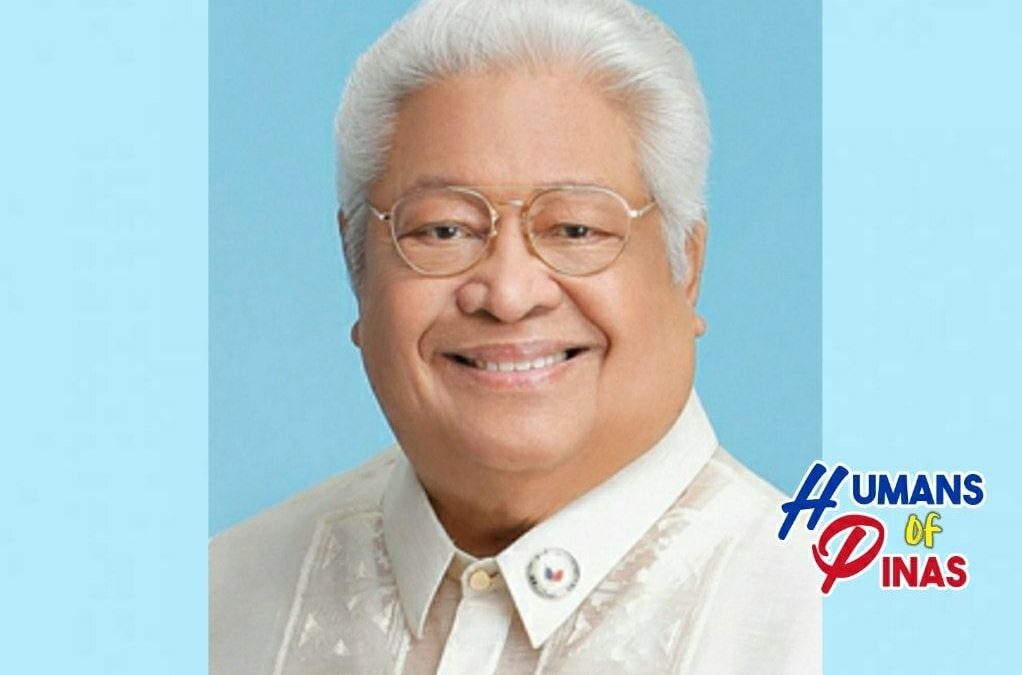
“My heart tells me not to be a masochist by sharing the harrowing and painful experience of my family during Martial Law. But my mind asserts that I should speak out and disseminate the truth for silence kills. It kills the truth. It kills freedom of expression. It kills the right to dissent. It kills democracy.
Many were forced to keep quiet by the might and terror of Martial Law. But not a few refused to be cowed into submission and be muzzled, notwithstanding the threat to their life, liberty and security.
My two younger brothers, Hermon and Filemon or Ka Popoy, whose minds were both molded in UP Diliman, were among these courageous dissenters and resistance leaders.
My personal narrative on Martial Law is inevitably interwoven with the collective experience and shared oppression of the Filipino people under the various Martial Law executive edicts, policies and practices.
I learned about the declaration of Martial Law before it was publicly announced from Hermon who also said that Popoy, who was already with the underground movement, was safe. Ka Popoy was a UP student when he dropped out to join the forces against the dictator Marcos.
He survived the darkest years of Martial Law when he escaped from incarceration, and continued his crusade for the Filipino workingman. He was assassinated by unknown hired killers at the steps of the UP Bahay ng Alumni on February 6, 2001, or 19 years ago.
On September 22, 1972, the day following his signing of Proclamation No. 1081 putting the entire country under Martial Law, Marcos issued General Order No. 5. It prohibited “… rallies, demonstrations, picketing or strikes in certain vital industries, and other forms of group actions …” The Order warned that “… any person violating this Order shall forthwith be arrested and taken into custody and held for the duration of the national emergency or until he or she is otherwise ordered released by me (Marcos) or by my designated representative.”
This inordinately suppressive edict that sought to keep “all inhabitants” submissive robots was defied in no time by militant trade unionists who struck one after the other and later simultaneously in sympathy strikes.
These protest actions were staged by workers at the Gelmart Industrial Philippines, Inc; the Navotas Fish Landing and Market Authority; La Tondeña Distillery, Inc.; Atlantic Gulf and Pacific Co.; and Solid Mills, among others.
All these unions had my brother Hermon as their counsel. We were collaborating counsel in the case of the batilyos or fish haulers in Navotas. As their counsel, Mon, as we fondly called him, was no ordinary lawyer.
He rendered legal service pro bono. He even paid for the transcript of his client-workers’ testimonies in labor tribunals.
It was in his law firm, hardly three months into Martial Law, that on December 12, 1972 he was taken into custody by elements of the Philippine Constabulary. After undergoing tactical interrogation at Camp Aguinaldo, he was transferred to Fort Bonifacio where he was detained for two months. He was released without charges.
Mon’s detention was typical of many deprivations of liberty during Martial Law – indefinite detention without formal charges. His jailers, however, dismally failed to subdue his militancy.
In the words of my sister, Nilda Lagman-Sevilla, “Mon’s courage to resist repression intensified after detention, and his passion to serve the masses was inflamed by incarceration.”
Mon’s incessant advocacy for workers’ empowerment was suddenly halted on May 11, 1977. That day, he and Victor Reyes, a labor organizer, were to attend a lawyers’ meeting in Pasay City. They did not make it to the meeting. They were abducted and forcibly disappeared between Bago Bantay, Quezon City and Pasay City.
Our family learned about Mon’s disappearance three days later. An informant told us that he was seized together with Reyes by military elements.
My mother, father and I immediately searched for him daily in various military camps and police stations. He was nowhere to be found. As expected, no one in the military and police establishments admitted his abduction and detention.
My mother was a very courageous and resilient woman. But she would cringe and I could feel her anxiety heighten in every denial of Mon’s captivity. When we returned home, weary and exhausted from our failed search, she could not sleep.
She could not tame or restrain her boundless imagination that would take her to torture chambers, to cruel, inhuman and degrading inquisitions, where Hermon was a hapless but defiant victim.
Months turned into years of agonizing search, unanswered questions, endless waiting, and arduous striving for justice.
We are only one of the tens of thousands of families who are still endlessly waiting for justice. For many Filipinos, Martial Law was not only a bad dream, it is a continuing nightmare.
We should not forget the tragedy of martial law. We should not forgive the perpetrators and beneficiaries of Martial Law. National amnesia must be purged as an abhorrent malaise. Never again!”
“Martial Law was introduced to me at gunpoint … an M16 rifle treacherously and arrogantly held by one of the soldiers of the raiding team that barged into our house like mad dogs on that fateful day in Baguio the summer of 1973.
Their every hostile move unnerved and enraged us because it was as if they were frantically hunting down a ferocious criminal. They turned our house inside out in the vain attempt to see my brother, Ed, materialize from out of those invisible hiding places.
What terrorized us most was the threatening stance of their commanding officer, a certain Col. Eduardo, who barked orders to his men to surround the infant’s crib where my niece, who was not even a year old, lay sleeping.
They knew she was his child as their surveillance team had seen the couple bring their infant daughter home.
My mother steeled herself, but her anger and anxiety showed as she kept an eagle-eye on the marauders who insinuated that they could otherwise take the innocent infant to lure my brother and his wife out of their underground existence.
My father was thankful the subject of manhunt was not around. He was composed, despite the commanding officer’s accusations that his son was a top-ranking member of the Communist Party and belonged to the same collective as the alleged founder and chair of the subversive organization.
Our neighbors were not spared from the brutish display of military arrogance. Soldiers barged into the house across the street, suspecting our neighbors to be harboring my brother.
Even our friends from Manila who were having their quiet vacation were interrogated by soldiers, their summer house searched. The military agents arrested the head of that family and my brother, Nap, who had just come home.
They were pushed into the police car and brought to the Baguio City police station where they underwent tactical interrogation.
They also took away our new helper, Carlos, and brought him to Ambuklao, on the outskirts of the city. Soldiers threatened to push him down a ravine if he did not confess that he was a courier for my brother and his group.
Carlos replied that even if they killed him, he could not give them any information, as he was just recently hired by our family.
Since that military raid, my family was placed under surveillance. We had an activist, a fugitive, an enemy of the state. All throughout my high school life, I wore this truth like a badge of courage.
My brother’s absence was more pronounced during the holiday season when my mother wept with anxiety and longing for her eldest son. The few cryptic missives sent to us through clandestine channels were read, passed around, read again.
My mother smudged it with tears sometimes as she pondered the fate of her granddaughter, separated from her Tatay and Nanay.
The phone would ring during birthdays and holidays and we had that uncanny feeling, listening to the silence at the other end of the line. We were tempted to utter his name, but knew our phone was bugged. So, we just let our voices be heard by him who pined and hurt for home.
When I entered UP Baguio in 1975, the air was rife with discontent and talk about our student leaders’ readmission after their release from detention. The clamor was for the restoration of the student publication and the student council that were banned upon the declaration of Martial Law.
We demanded that these be reinstalled as they were the only channels for the expression of academic freedom (a myth, actually at that time).
My brother was arrested in a hospital somewhere in Manila in September 1976. He was later transferred to Camp Bicutan in Taguig. A difficult and trying period for the family; the unease was assuaged by the fact that, at least, we knew he was alive and he shared a cell and collective with captured comrades.
There we heard and learned of harrowing stories of their other comrades’ fateful and tragic ends at the hands of Marcos’ butchers and beasts. It was in Bicutan prison where I first heard and learned songs of freedom from the US-Marcos dictatorship.
When I got my college diploma in 1980, I left for community immersion. I informed my family that I was heading for the countryside as this was what the times needed ─ dauntless youths who would defy the dictatorship by organizing the masses through political education, organizing and armed resistance.
The struggle of the Kalingas and the Bontoks against the World Bank-IMF-funded Chico Dam project was raging. Also escalating was the Tingguians’ resistance to the Cellophil Resources Corporation owned by a Marcos crony that was devastating the forests of Abra.
Never was I more certain that it was in the resistance of the indigenous people, whose patrimony could have been easily wiped out with a stroke of a pen, that I wanted to be counted. The stark reality of far-flung communities struggling to survive amid state neglect, oppression, and deprivation somehow always validated my need to be part of the resistance.
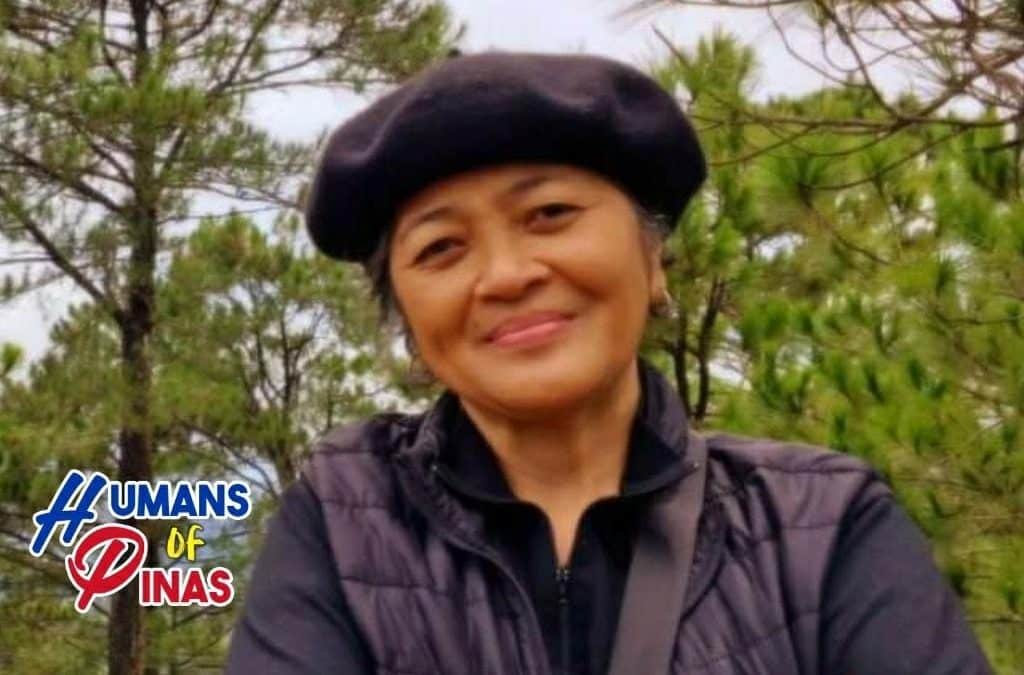
All those dark years, I kept a notebook where I poured my poems on missing home and being a child of different families who opened their doors to us and shared hearth with us. With the nom de guerre Lucia Makabayan, I would read my works in an underground publication, which I got to hold and read years later.”
“Nasa grade school pa lang ako nung ipinataw ang Batas Militar noong 1972. Ang tanda ko noon ay mahigpit na curfew, ginugupitan ang mga nahuhuling mahahaba ang buhok, at ang walang-patid na broadcast ng slogan: “Sa ikauunlad ng bayan, disiplina ang kailangan.”
Sa aking pagtanda, nagsimula ang patuloy kong pagtatanong patungkol sa kahirapan at pang-aapi, at sa tulong ng mga progresibong kurso at guro, at sa napadalas kong pagbabad–“exposure”/“immersion”–sa mga dukha, ay lumawak ang aking pag-unawa sa mga sakit ng lipunan.
Oo, naging aktibista ako, at nakilahok sa mga sari-saring isyu ng mga mambubukid, ng manggagawa, at ng maralitang tagalungsod–mga pagunahing biktima ng diktadura noon–at pagtutol sa mabangis na Batas Militar.
Nag-organisa din at lumahok sa maraming sama-samang mobilisasyong humarap sa maraming mararahas na dispersal: pagbatuta, teargas, pagbomba ng firetruck ng tubig-imburnal, at pati pamamaril. (Andun ako sa rally sa Welcome nung nabaril ang kasalukuyang tsanselor ng UP Diliman.)
Subalit tuloy-tuloy pa rin ang taumbayan sa mga protesta. Isang Welgang Bayan noong 1985 ay pinangunahan ng mga jeepney drayber upang tutulan ang pagtaas ng presyo ng gasolina at bilihin, at patuloy na paninikil sa karapatan ng tao.
Nagtipon ang iba’t-ibang mga sektor sa mga convergence point sa buong Kamaynilaan, kasama ang Cubao, kung saan ako nakilahok.
Nagkaraoon ng programa kung saan nagsalita ang mga tsuper, at kinatawan ng mga sektor, kasama na ang mga kilalang direktor na Lino Brocka (+) at Behn Cervantes (+). Mga 300 katao kaming payapang nagpipiket, habang nakikiusap sa mga bumibiyaheng pailan-ilang jeep na magtigil-pasada muna, para sa bayan.
Biglang pinalibutan kami ng mga 100 pulis (bukod pa sa mga di-nakauniporme). Noong tinapos na ang programa, sinigawan nila ang mga taong mag-disperse; subalit wala pang 10 minuto ang nagdaan, biglang lumusob ang nakahanay na pulis at bigla kaming pinagpapalo at pinagdadampot.
Nakwelyuhan ako ng isang ahenteng naka-plainclothes, binatukan, kinaladkad at tinulak sa loob ng isang Harabas. Dahil takot na baka saan kami dalhin (o iwala), mariin kong sinabihan ang mga madreng lumapit sa sasakyan na samahan kami’t huwag iiwan, sabay bigay ng pangalan.
Doon nagsimula ang kalbaryo naming mga 37 kataong hinuli (kasama ni Lino at Behn). Una’y dinalang Camp Karingal, tapos isang gabi sa QC Jail, bago dinalang Bicutan kung saan kinukulong ang mga “subersibo”.
Mapalad pa ako–dahil sa mga kilala kong “klasmeyt”, tuloy-tuloy na pagreport ng media, at malawakang pagkondena (pati international) ng aming pagkulong–di kami ginalaw o tinortyur nang pisikal, na di normal sa mga karaniwang detinido.
Sa aming kaso lalong lumiinaw ang reyalidad ng Batas Militar sa ilalim ni Marcos: pagkitil sa karapatang magpahayag at magtipon. Marahas na panggugulo ng mga lehitimong rali. Ilegal na pagdampot at pagkulong.
Pekeng mga paratang ng kapulisan. Harapang pagsisinungaling ng mga huwad na testigo sa korte. Maniobrang legal at huwad na paratang (sedisyon, subersyon, illegal assembly) upang di kami makapagpiyansa at makalaya.
Pagpataw ng Presidential Detention Action–kapangyarihan ng diktador na magkulong ng kahit sino, kahit walang paratang.
Tila malaki rin ang nagawa ng aming kaso upang umigting ang paninindigan, pagtutol, at pagbabalikwas ng sambayanan.
Walang tigil ang suporta sa amin: serbisyong panlegal; tulong pinansyal at di-materyal; pagbabantay at pagsisiwalat ng kaso; sari-saring liham, petisyon, at pahayag na umabot sa iba’t-ibang sulok ng mundo (pre-internet); patuloy na mobilisasyon kasama ang napakalaking rali sa Cubao noong Pebrero 1985 para sa aming paglaya.
Nakalaya kami 14 Pebrero 1985–pagkatapos iatras ng rehimen ang PDA, sa takot na baka matalo sila sa sinampa naming kaso sa Korte Suprema.
Pinatupad ang order ng aming RTC Judge (Miriam Defensor Santiago!) na makapagpiyansa kaming 37. Dinala kaming sa St Joseph’s College at doon kami pinakawalan sa aming mga abugado, pamilya, kasama, at mga minamahal.
Naging mahalagang yugto ito sa pagragasa ng kilusan laban sa diktadura, at laong paghubad sa pagka-lehitimo ng rehimen. Napilitan tuloy si Marcos magpatawag ng “Snap Elections” noong Pebrero 1986, na sinubukan muling nakawin ng diktadura.
Ito’y naging mitsa ng pagbuhos ng milyun-milyon sa EDSA at sa iba’t-ibang lugar sa kapuluan, at patalsikin ang diktadurya sa mapayapang rebolusyon, gamit ang Lakas ng Sambayanan.
EPILOGO
Noong 2015, kasama ako sa mahigit 75,000 biktima ng Batas Militar na nagsampa ng “claim” (batay sa aking ilegal na pagkulong) sa Human Rights Victims Claims Board (likha ng RA 10368, na nagtalaga ng proseso upang magtala, magsuri at maggawad ng pinansiyal na ayuda sa mga biktima, na galing sa nasamsam na ilegal na yaman ng mga Marcos). Isa ako naaprubahang gawaran ng reparasyon noong 2018.”