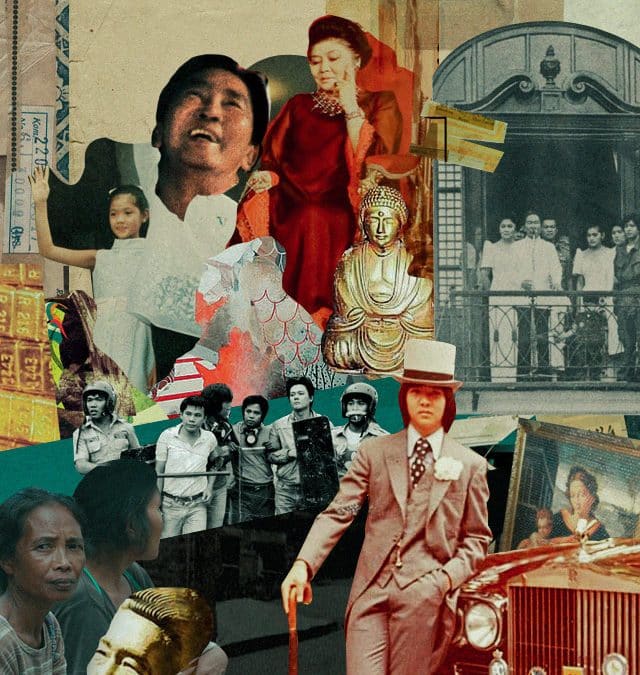
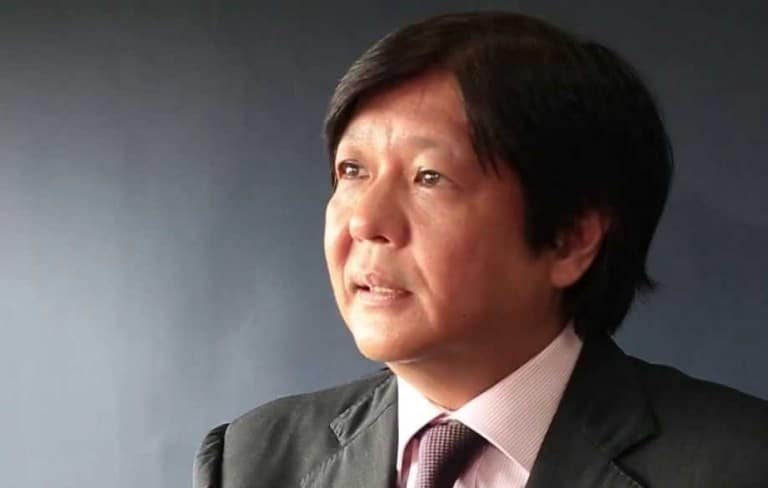
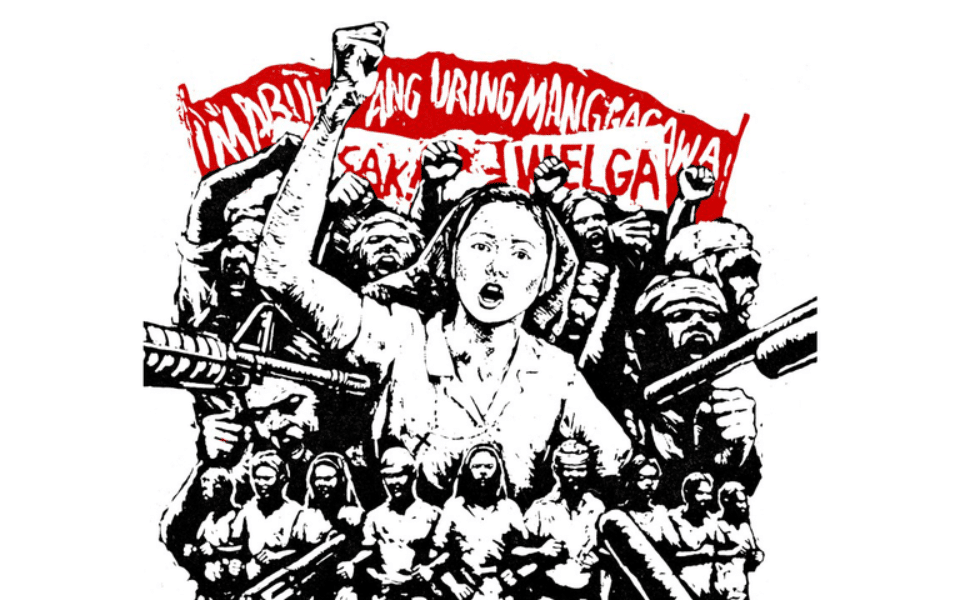
When Imee Marcos, the dictator’s daughter, was asked about Martial Law and the excesses of her family, she dismissed the question with a bald-faced lie.
She did not know much about it, she said, because she was too young.
What she didn’t know was that in the family’s eagerness to escape the mob, they scurried out of the presidential palace that fateful day of February 1986, leaving behind incriminating documents on their ill-gotten wealth.
One of the documents showed that Imee tried to make singil from her dad’s dummies the shares they held in trust in many companies for Ferdinand Marcos.
I recall the late Presidential Commission on Good Government chairman Jovito Salonga telling us reporters that when she knew her father was dying, she tried to make a list of all the shares in various companies that cronies secretly held “in trust” for Marcos.
I can no longer find the story I wrote on this.
But here is a piece written by Manila Chronicle reporter Julie Javellana on the same matter.
To this day, Imee, her brother Bongbong and sister Irene are still trying to collect. This time, they are trying to unlock the wealth that is still sequestered or in banks abroad by getting President Rodrigo Duterte to sign a universal settlement.
What is it that makes people believe they’d get a share of the Marcos wealth?
(SPOT.ph) The plot of redistributing Marcos’s riches to Filipinos has many faces. On the one hand, decades of policymaking—from the formation of the Philippine Commission on Good Government to calls for international intervention—have made little progress in recovering the ill-gotten wealth of a conjugal dictatorship’s decades of plunder.
And still, there are the thousands of human rights victims under the Marcos dictatorship who have yet to get their due from the Marcoses: the torture and killing remaining unaccounted for decades after their suffering. On the other hand, Marcos’s most loyal devotees often spin narratives of how the late dictator’s wealth came to be: Yamashita’s treasure, businesses, gold reserves. There seemed to be a grand plan for Marcos and his kin to one day spread the wealth to the Filipino people, as if it was their intention all along.
It is from here that the weekend’s social media firestorm began.
The thousands who gathered at the University of the Philippines Los Baños campus on September 23 were there under the guise of an all-too-familiar narrative: that they would get their long-awaited share of the Marcos wealth. The UPLB Perspective reports that the gathering was a “general assembly” for members of the One Social Family Credit Cooperative, formerly known as Bullion Buyer Ltd.: an organization that purports to be a beneficiary of the Marcos wealth, tasked to distribute the money to its members.
The approach was simple: each family registered to the organization was to receive P1 million from the Marcos wealth. Half of that would go to the cooperative as a share, and half would be distributed to the families over the better part of five years. The catch was that one should be registered to the organization, attend a membership seminar, and own a signed copy of Life and Achievements of Ferdinand E. Marcos as proof of membership.
It was a scene straight from the most extreme examples of prosperity evangelism and/or pyramiding schemes: only instead of a seed of faith sown for the promise of riches, one only needed to plant a seed of fealty for a chance at wealth.
***
Of course, this isn’t the first time that people were duped into believing that their key to economic redemption is to be found in pro-Marcos pamphlets. Every now and then, “community meetings” will be held in small venues with the same story to tell: the Marcos wealth is here, and for a few pesos and a membership form, you too can be part of the wealth distribution that the scammers have the temerity to call “Marcos’s blessings.” But, as the UPLB Perspective reports, many of those who gathered at the UPLB campus weren’t the usual prey of enterprising pyramid scammers: they were the elderly rural poor whose political consciousness was formed in the Marcos era, and stunted by a dictatorship that led them to believe that their lives were much better back when Ferdinand and Imelda were ruling the roost.
And it’s hard to contest that: Marcos’s most fervent loyalists aren’t found in urban centers, but in far-flung rural areas with an aging Marcos-built road, a Marcos-built school, and continue to feed on the scraps that the Marcoses threw their way back when they were in power. Decades of regime change—and the development programs that came with it—have done little to alleviate the crushing poverty that comes with much of rural life in the Philippines. Even disastrous programs and dangerous projects like Masagana 99 and Biyayang Dagat are looked upon wistfully by some.
And it shows in the composition of the people who attended the One Social Family Credit Cooperative (OSFCC) weekend gathering: many of them come from some of the poorest provinces in Southern Luzon, some even making the journey to Los Baños at the crack of dawn for a chance at Marcos’s wealth. It shows in the motivation of why people go there: the UPLB Perspective reports of a man who based his decision to join the organization on the basis of numerology. It shows in the brazenness of the organization itself: despite a Securities and Exchange Commission advisory earlier this year, Bullion Buyer—in all its forms—continues to operate in areas of the Philippines that are hotbeds for revisionist propaganda. Kept poor and misinformed, these communities are vulnerable to anything and everything thrown at them, if it means a chance out of the drudgery of their poverty.
***
Some of us are quick to dismiss the setting as yet another example of the bayaran and hakot undercurrents that seem to pollute every sort of gathering that has a political flavor in it. I guess it’s cynicism that comes with being in somewhat privileged positions: with readily available information and education, it’s not a monumental task for us—at a personal level—to dismiss the vain efforts of certain groups to capitalize on Marcos nostalgia to make a quick profit.
Yet it’s never plain old gullibility or naïveté that drives many of the elderly rural poor to take their chances at Marcos’s wealth. More than anything, it’s a silent cry for help: if there seems to be desperation and despair to be found in thousands of people, mostly the vulnerable elderly, to gather at a place to receive the promise of “blessings” from charismatic estafadors, it’s only because there is. Bereft of information, access to quality education, and turned to as allies only during election season, they become easy targets for the pro-Marcos deodorizing narrative. The narrative persists because, and benefits from, the continued exclusion of vulnerable segments from the discussion of many things. Among which, the enduring and chronic impact of revisionist history.
The bigger task ahead is far greater: fighting the pains of historical revisionism—and deodorizing the Marcoses, at that—is something that comes with long-term, forward-looking programs that alleviate poverty and bring real development to the poorest places in the country. For them to know, at least, that the rest of the country is watching for their welfare beyond election season, and that the true wealth that comes with long-term development and poverty alleviation programs lies beyond the hoard of gold the Marcoses seem to be sitting on.
Besides, if they really wanted to fulfill Ferdinand’s will, they should have given it away in the first place. Or admitted to its existence. But they never have: and a cycle of deception continues to fuel the fires of scams that prey upon the vulnerable.
Cleve Arguelles looks at how a forgetful Philippines may return an authoritarian clan to the presidential palace.
They say that it takes a village to raise a child. But to raise a dictator’s son and groom him for national leadership? That takes a whole nation.
Ferdinand “Bongbong” Marcos Jr, son of former president and dictator Ferdinand Marcos Sr, is aiming for the vice-presidency in this year’s national elections. Thirty years after the popular uprising known as the People Power Revolution ousted the clan from the national seat of authority, the Marcoses are now gunning for one of the top two posts in the country.
Bongbong Marcos is currently a member of the Philippine Senate (a national elective post). His sister Imee Marcos is governor of the vote-rich province of Ilocos Norte, and mother Imelda Marcos is a member of the lower house of the Philippine Congress as representative of the same province.
In the latest polls, Bongbong Marcos is narrowly ahead, but has a clear lead in Metro Manila and with middle- to high-income voters. Why is the Philippine electorate now ready to elect the successor of the family that made their vast fortune through the pillage of the country? It’s because of the absence of an inclusive national collective memory of the Marcoses’ rule.
I grew up in a family of “loyalists”– a convenient category referring to a disparate, diverse group of Filipinos remaining loyal to the dictator Ferdinand Marcos and his family despite his ousting after the People Power Revolution. I learned about this part of our country’s history through the lens of a “loyalist family.”
My grandmother, a village councilor, has always supported the Marcoses. If asked about her choice for this year’s elections, she will readily share her “loyalist” vote: to elect Miriam Santiago, Bongbong’s running mate, as president and the dictator’s son as VP.
Miriam, she argues, is sick and will hand over the presidency to Bongbong as soon as she’s unable to serve. This, she thinks, is the Marcoses’ plan to return to Malacañang (the presidential palace).
And she wholeheartedly supports it. When confronted about the dark days of martial rule under Marcos and his family, she is quick to defend them: “My memory of the Marcos days were different. There was peace and order and our country was respected by others.”
In a big slum community in Quezon City, the Philippine’s most populous urban area, my “loyalist” grandmother’s claim resonates with other “loyalists.” Here, I am studying the voting behaviour and decisions of urban poor voters.
In many cases, I have encountered similar responses to questions on electing Bongbong as VP: “I want the Marcoses back in Malacañang,” or “I have a good memory of the rule of the Marcoses,” and so on. My attempts to offer a different version of the story are repeatedly dismissed.
It is one thing to be ignored by those who have witnessed and survived martial law. But it is definitely another thing to hear first-time voters, as young as 18, articulate the same claims as older generations. How does a Filipino millennial remember an episode in this nation’s history that they did not witness? And since the act of remembering is deeply political, how does a nation like ours struggle over memory, memorialising, remembering and forgetting?
The possibility that Bongbong Marcos, and by extension the Marcos dynasty, will be elected to the vice presidency this year reveals that memory is not only linked to the past, but also to the present and future. Acts of remembering are political practices that give meaning to the present and gain power over the future.
Another challenge is that those without memory of the Marcos period rely on institutions: schools, media, family, state. A grade school history textbook long used by both public and private schools has been found to contain “revisionist” versions about the martial law period, citing the “upliftment of Filipino lives” as the primary gains during the dictatorship. The history textbook is silent on the history of abuses, greed and violence perpetrated by the Marcos government. In issues of collective memory, silence is as crucial as remembering.
The media, on the other hand, is not silent. Regular annual programs are dedicated to the People Power Revolution. However, this memorialisation often centres only on Metro Manila as the symbol of national uprising against Marcos rule. The overthrow of the dictatorship was portrayed as an uprising that emerged and centered only on the metropolis.
Without representations from other areas, especially the margins, in the narrative of the defeat of the dictatorship, the official national memory excludes local memories of the same events. The Wall of Remembrance that was set-up to honour the martyrs and heroes who fought against the Marcos dictatorship illustrates the same problem: most of the names listed come from the national urban center, and are part of the professional class. Instead, decentering the memory of the revolution to include local and even contrary, disruptive memories, will create a more inclusive national collective memory and decrease the possibility of another Marcos presidency.
Another key factor is the return and persistence of ‘cacique democracy’ — a political system dominated by local bosses — in post-Marcos Philippines. Possibilities of political democratisation faced major backlash from powerful oligarchs.
The absence of a truth commission to set historical memories straight is also a factor – presenting the Marcoses and their allies with an opportunity to pull the people’s memory of the dictatorship in different directions. No post-Marcos administration has formally attempted to keep the memory of the injustices, human rights violations and corruption alive.
When Ferdinand Marcos died in 1989, chief of the board of censors Manoling Morato reprimanded the media for “demonising the Marcoses.” Historical truths were easily made fictional in the absence of complete prosecution of the actors involved: none of the Marcoses have ever faced imprisonment for their actions.
In reality, the Marcos clan is not “returning”, as others have noted, because they never really left. In the popular national imagination, we have maintained spaces for a fragmented memory of the Marcos rule, with the Marcoses themselves contesting official narratives to their advantage.
George Orwell once warned that the most effective way to destroy people is to deny and obliterate their own understanding of their history. Without control of our past, we surrender our political power. The absence of an inclusive national collective memory has made it possible for the Marcoses to reach the doorsteps of Malacañang once again.
The struggle over memory is far from over. We continue to decide what to remember and what to forget. But we must remember that what constitutes our national collective memory reveals who and what we are as a nation.
It takes a whole nation to remember, but also a whole nation to forget.
In an effort to counter the growing anti-Marcos sentiment, the Marcoses and their apologists urge us to forget history and “move on.” “Our people,” says Ferdinand Marcos Jr., “do not need history. They need solutions.” This despite their constant reference to the supposed achievements of the late dictator. His apologists, for their part, tell us that we should not hold children responsible for the sins of their father. Furthermore, as if speaking from a higher ground, they appeal to forgiveness.
To my mind, they misunderstand or oversimplify the meaning of “moving on,” responsibility and forgiveness. Let me address each of them here.
“Moving on” cannot happen unless we are clear about what it is we are moving on from. Imagine someone got raped. Twenty years later, the rape victim meets the rapist. It is perfectly understandable that the sight of the rapist will make every part of the victim’s being twitch in revulsion. Now imagine the rapist saying, with a sneer on his face, “C’mon, it’s been a long time now. Let’s move on.” Even if it is not the rapist himself, but his son, who meets the victim, if he approaches the victim in the same way, he becomes not only utterly insensitive but even complicit to the crime, if not literally, at least potentially. For how can someone prevent a crime from happening again if, to begin with, he does not admit that it is indeed a crime, and resolve to prevent it from recurring?
What about responsibility? Let us be clear about this: Absolutely no one is responsible for being born into this world, including the circumstances of one’s birth. But what we do in life, how we interpret the past, how we project ourselves toward the future, whether we condone past evil, or worse, deny the evil—that is largely, if not entirely, one’s responsibility.
To illustrate this point: Of course the Germans today are not “responsible” for the sins of the past. But today, anyone caught making the Hitler salute—German or not—will be jailed. Making the Hitler salute is a criminal offense not just in Germany but in other European countries as well. That’s how the Germans and Europeans of today “take responsibility” for the past. Even the sale of “Mein Kampf” has been banned for decades now, and its republication is stirring debate only now that its copyright expires at the end of this year, and by next year is assumed to enter public domain, 70 years after Hitler’s death.
It’s not even 30 years yet since Ferdinand Marcos died, and we seem to have already forgotten. And how easily.
When “Schindler’s List” was first shown in German theaters, one observer saw how Germans came out of the movie houses with their heads bowed, gripped in silence. One wonders how these Germans, born half a century after World War II, were feeling as they watched the film, and as they walked out with heavy hearts and slow step. What indeed could they be feeling in their hearts?
More than five years ago, the Germans found themselves in a dilemma. They asked themselves: Shall we keep the concentration camps or convert them into beautiful parks? That was a very difficult decision to make. In the end, the Germans chose to keep the concentration camps as a sacred reminder of the past.
Finally, what of forgiveness? Here we are treading on infinitely higher ground. We are entering the realm of grace. And again the Marcos apologists are perverting the meaning of forgiveness, which is beyond mere human agency, whether in terms of asking for it, or giving it. We do not understand the grace of forgiveness if we think of it merely as something at our disposal, like a kind of power that we wield against those who wronged us. But in the moment of forgiveness, both the wronged and the wrongdoer receive the grace.
The event of forgiveness, even as it does not entirely or primarily depend on human agency, cannot take place unless the ones who stand to be blessed by it take part in their little way—in that the wrongdoer acknowledges that something wrong was done, and that he or she committed it. And on the part of the one wronged, he or she acknowledges that forgiveness is indeed possible, that conversion is possible—but only by the grace of God. But unless the wronged and the wrongdoer do their part, the event of forgiveness will not take place. Even if the Son of Man is crucified a million times, over and over again, forgiveness will not take place unless the one who sinned acknowledges the sin. And that is its mystery: For the moment of grace to happen, we need first of all to make that act of affirmation of grace, against which alone we can see sin as sin.
Didn’t the great theologian Karl Rahner say that sin may indeed be forgiven, but that still it remains, even as forgiven sins? The scars on Jesus’ body remain, even as He has “moved on” to the life of resurrection. And today, as we kneel before the Cross, we behold not just the infinite grace of God’s love but a reminder as well of how we are each time capable not only of turning away from that love but also of deliberately trying to destroy it.
The political thinker Hannah Arendt popularized the expression “banality of evil” based on her observations of the trial of Adolf Eichmann. The chief architect of the Holocaust showed no remorse, not even hatred for those trying him, since he was convinced he was simply doing his job.
“Banality of evil” may not even be enough to describe the actions and general bearing of those who are bent on denying the terror of the Marcos dictatorship. They are even spreading a forgetfulness of evil. In doing so, they desecrate the memory of those who fought against that evil, many with their lives. Worse, they may be deliberately taking part in the efforts to pave the way for the return of that evil, for which they alone will be held responsible.
Remmon E. Barbaza, PhD, is associate professor and chair of the Department of Philosophy, Ateneo de Manila University.
In “Sister Stella L.,” Vilma Santos plays the titular nun who becomes involved in labor strikes.
Manila (CNN Philippines Life) — The recent election has brought to light a number of realizations about the Filipinos’ current state of mind. One that stands out, in particular, is the way some of the youth view the country’s Martial Law era under the Marcos regime: It has, apparently, been relegated to an urban legend of some sort, a “myth,” — or worse, a mere “thingy.”
You didn’t live during Martial Law — you lived through it. It was a real-life dystopian novel, complete with a moving revolution at the climax, except everyone was divided into the Elite and the Oppressed, and there were no gaudy love triangles. That’s why the kind of denial or disregard that’s on display today can be dangerous. Reactions from the less ignorant appropriately ranged from incredulity to plain rage. Have history classes taught us nothing? Has history itself taught us nothing?
But while digging up old history textbooks and cracking them open again sounds like a grand time (or not), it would be better to virtually live the era through the eyes of the people who were actually there.
Here’s a list of literature and films — the bare essentials — that can get you started in your re-education. This is by no means an exhaustive and encompassing guide but rather a jumping-off point.
“Sister Stella L.” and “Dekada ‘70”
Where to find them: iFlix (“Dekada ‘70”), as well as music and video stores.
https://youtu.be/6Zz7SqrzWmw
Vilma Santos finds herself in two different but tonally complementary films released almost two decades apart, where her characters find their voices and evolve from apolitical passivity to determined rebellion. In Mike De Leon’s “Sister Stella L.” (1984), Santos portrays the titular nun who, driven by the neglect of the masses, gets involved in labor strikes.
https://youtu.be/jY6P6mDKPNo
In Chito S. Roño’s “Dekada ‘70” (2002), based on the novel by Lualhati Bautista, she plays a mother trying to raise five children with her husband during Ferdinand Marcos’s dictatorship. As the sons turn to activism, the family gets caught in increasingly violent and dire situations.
Esquire Philippines, September 2015
The September 2015 issue of Esquire Philippines coincides with the 43rd anniversary of the declaration of Martial Law and features accounts of life and struggles during the era.
Where to find it: Digital copies are available on buqo.ph.
This issue coincides with the 43rd anniversary of Proclamation No. 1081. “The stories contained in these pages are not just about the past,” editor-in-chief Erwin Romulo wrote in his editor’s letter, “but about why [Martial Law] still matters today, why we still need to be reminded of acts of bravery, and to know the substance of those who have started revolutions by taking up arms or the pen.” The features take in aspects of Martial Law from all sorts of perspectives: Piolo Pascual talks about filming “Dekada ‘70” in the cover story; Aurora Almendral writes about the unlikely love story between her mother, who hailed from a family of communists, and the head guard of Ferdinand Marcos; an article exposes the carefree excess and hedonism in the lives of the upper class during the era; and Rep. Neri Colmenares, human rights lawyer and 2016 senatorial candidate, talks about his activism and subsequent hardships.
“Mondo Marcos: Writings on Martial Law and the Marcos Babies”
“Mondo Marcos” collects 50 works of fiction, nonfiction, and poetry from writers who were born and raised during Martial Law.
Where to find it: National Book Store.
The editors Frank Cimatu and Rolando B. Tolentino waited 13 years to see this project realized, and the result is a compilation of 50 pieces of fiction, nonfiction, and poetry on Martial Law in both English and Filipino by the babies born and raised during that time. Some stories are set in places outside of Metro Manila, such as Baguio and Kalinga, illustrating the effects that were felt all over the country. The collection touches on the People Power Revolution as well, and even the stories of those who fostered connections with the Marcoses and enjoyed the privileges these afforded them. Ultimately, it’s an anthology about grasping reality, activism, and coming of age in a time that forces you to grow up.
“Subversive Lives”
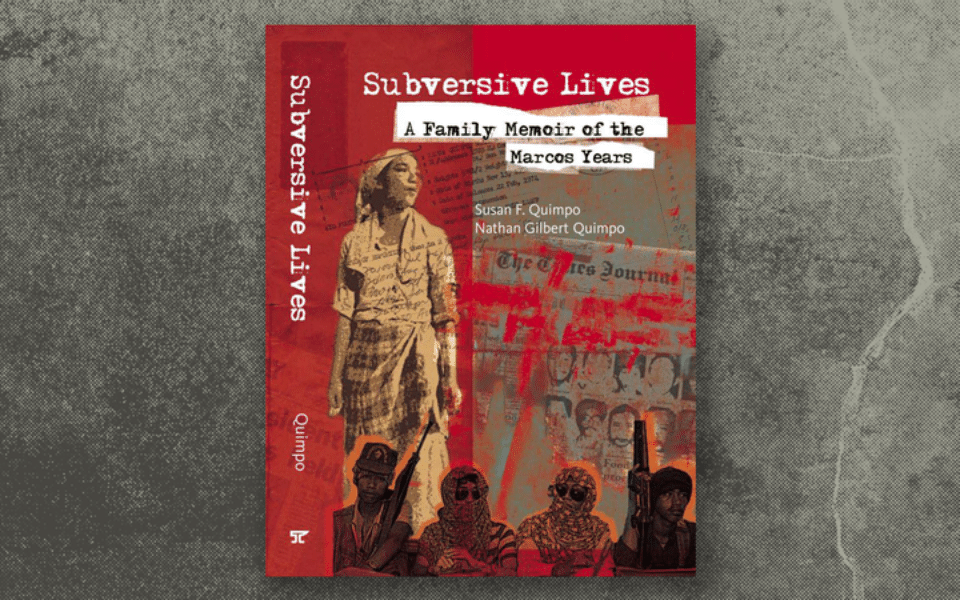
“Subversive Lives,” written by siblings Susan F. Quimpo and Nathan Gilbert Quimpo, is a collection of testimonies about the difficulties and heartbreak of uprising and rebellion during the Marcos regime.
Where to find it: National Book Store.
Written by siblings Susan F. Quimpo and Nathan Gilbert Quimpo, “Subversive Lives” collects testimonies about uprising, loss, and heartbreak amid revolutionary movements during Martial Law. The book explores vivid true tales of imprisonment and torture at the hands of the military, strikes in Mindanao, and alienation from loved ones — abuse, betrayal, broken ties, and so much death — underscoring the pain and sacrifice made by ordinary people, some not even of age, in a jarringly extraordinary time.
“Batas Militar”
https://youtu.be/SG2Mx7Y5vzc
Where to find it: It’s up on YouTube.
Aside from the imprisonment of those who opposed the Marcoses, this two-hour documentary covers the infamous stolen wealth and the numerous human rights violations committed by the dictatorship, and highlights the actions and efforts of Ninoy Aquino, regarded by some as the heroic antithesis of Ferdinand Marcos. The video uses film footage and pictures of true events from 1972 all the way up to the EDSA Revolution in 1986, and features interviews with the likes of Cory Aquino, Fidel Ramos, and Imelda Marcos.
She was the fearless warrior who never stopped fighting. Susan Quimpo, friend, comrade, sister, simply would not quit.
She joined the fight against Ferdinand Marcos as a young woman — then led the effort to make sure young Filipinos know, remember and understand what the dictator did to the country.
Susan Quimpo passed away last week. She was one of the most courageous activists of our generation.
That courage was underscored by the way she left this world: She had been struggling with an illness over the past two years, but she took one more fight, one more battle against another dictator.
The activist who faced off with Marcos did not think twice about taking on another thug, Rodrigo Duterte. It was a fight that quickly became eerily similar to, and in some ways worse than the one our generation faced.
And the urgency of that new battle was evident in Facebook messages she sent me, especially as the brutality of his regime became clearer.
“If people react fast through a ground swell the martial law or revolutionary government declaration and all its ill effects can be avoided,” she told me amid reports that Duterte was planning a crackdown by declaring a revolutionary government. “Don’t wait for leaders. Be one.”
Sadly, it was a journey, a fight, whose end Susan would not be able to witness and celebrate.
She died as the new dictatorship was tightening its grip on power. Her journey ended shortly after Duterte signed a cruel ‘anti-terrorism” law to crackdown on anyone who fights back against his regime.
It was the end of a warrior’s journey, bold and awe-inspiring.
We had known each other at UP in the early 1980s, at the height of what eventually became a triumphant battle against the Marcos regime. We became close years later as we shared insights into what became a shared passion: telling the stories about the fight against dictatorship.
I wrote a biography of Edgar Jopson in 1989 which was republished as UG, An Underground Tale in 2006. She became interested in the process I went through in putting together the book as she pursued her own project. It was an ambitious narrative about the Martial Law era focused on her own family.
It quickly became clear to me that it was an important undertaking, and one that I actually related to. That’s because Susan and I shared a similar background. We came from middle class families with hard-working parents who wanted their children to get a good education so they could lead stable, prosperous — and safe — lives.
We were children when Martial Law began in 1972 and we both had and were influenced by older siblings who, with the rise of dictatorship, opted to pursue lives that were neither stable, prosperous, nor safe — who, amid the abuse, thuggery and torture under Marcos, declared: ‘We can’t just stay silent — we have to fight back.’
Susan’s family paid a hefty price for that defiance.
Of the 10 children of her parents, Ishmael and Esperanza Quimpo, seven joined the underground resistance to the fascist dictator Marcos; five were imprisoned; four tortured. One was murdered by the military; another abducted and is presumed dead; another forced to live in exile in Europe.
Subversive Lives is undoubtedly one of the most compelling and important narratives of the Marcos years.
But it was also just a small part of what Susan wanted to accomplish: to help young Filipinos know, remember and learn from our past.
“My sole purpose is to remember a generation of activists who really gave their all,” she told me in 2013. “Dapat lang naman. It has to be.”
When Subversive Lives came out in 2012, it had become clear that many young Filipinos didn’t know much about Marcos and weren’t aware of what we had gone through under his dictatorship.
That was when Susan Quimpo was transformed into the leading activist of the Martial Law generation who led the struggle to correct what had been the gravest mistake of our generation: failing to help later generations know, remember and understand how dictatorship wrecked Philippine society.
Writing Subversive Lives was one way to address the problem. But she knew that wasn’t going to be enough. She had to reach out to young Filipinos to inform, educate and engage with them on what had happened to our country under dictatorship.
It wasn’t going to be easy.
How to connect with young people in exploring the Marcos years was a concern she was constantly thinking about. “Tell me how UG has fared with Filipino youth,” she asked me once, referring to my book on Edgar Jopson. “I am constantly thinking of how best to maximize Subversive Lives as a vehicle for informing the youth”
Slogans, like ‘Never Again!’ which became an activist battle cry, can only go so far. “We keep saying, ‘Never Again to Martial Law,’” she told me. “But really… besides ourselves, who actually gets the message?”
To find more effective ways to spread that message, she hit the road, spending time with young people on campuses and other venues.
“I spent much of last year doing a school tour (high school/university) to give talks about martial law during the 40th anniversary of its declaration,” she told me. It was difficult to connect – but one thing was clear – the kids were interested in Martial Law, but they really needed a language they could understand.”
We had talked about putting together a new book together with writer Kris Lacaba on the Marcos years geared to millennials and other young Filipinos, But eventually, Susan saw the need for a more direct and dynamic approach.
In early 2016, she helped launch The Martial Law Chronicles, a campaign that featured a more direct, grassroots approach, including a wildly successful exhibit and in-person presentations on high school and college campuses.
She continued reaching out to even more young people in classrooms across the country. She clearly connected with many of them like Matthew Flores, a 10th grader at Xavier School in Manila who talked about what he learned from Quimpo and who shared his insights in a school publication.
“I feel that we are all compelled to become a more socially aware community, to see the parallelism between then and today,” Flores wrote. “After the talk, I was compelled to ask myself, “What am I called to do? What do I do now?’ I believe the best way we can properly honor the Martial Law victims is by making sure it doesn’t happen again.”
It is happening again.
Duterte’s election in June 2016 ushered in a new era of brutality, marked by mass killings and a new abusive, authoritarian order. Susan was personally outraged by Duterte’s decision to honor Ferdinand Marcos as a hero worthy of burial at the Libingan ng Mga Bayani.
She led a daring, creative campaign, dubbed #BawatBato, in which activists and citizens wrote names of the victims of the dictatorship on stones which they then placed on what was to be Marcos’ gravesite at the Libingan.
“Buti pa nga si Marcos may bangkay, marami ho tulad namin, wala kaming bangkay and we cannot even mourn their death,” she was quoted in a new report, after Marcos was buried at the Libingan, referring to his brother Jan who was made to disappear by the Marcos security forces.
In 2017, Ohio University, where she had earned graduate degrees, published an international edition of Subversive Lives which led to plans for a US tour.
Susan had always understood the importance of the huge Filipino community in the US. She had launched and led Tagalong On-site, a popular and successful program which allowed young Filipino Americans to learn Tagalog while being exposed to Philippine social realities in the urban poor areas or rural communities.
But the 2017 tour unexpectedly turned into a distressing, even painful experience.
Strange things started to happen during the San Francisco leg of her trip. One event got canceled mysteriously and others had to be scaled back amid lies spread about Susan. She was accused of being a red-baiter, whose main goal in the book and the tour is to wage a witch-hunt that would endanger the lives of activists.
These were brazen lies.
In a way the attacks underscored the powerful honesty and sincerity at the core of Subversive Lives, which recounted not just the idealism, courage and sacrifices of the Quimpo siblings, but also their criticisms of the underground left, including its hardline dogmatism and even an alarming capacity for torture and violence.
That antagonized people from the UG left, some of whom hit back at Susan. I denounced what was happening in a column that supported Susan.
But that triggered an even more outrageous attack.
A Bay Area organization, the League of Filipino Students at San Francisco State University, put out a statement titled “A ‘Subversive’ Only in Name, Not in Action” denouncing Susan and me.
“To members in the League of Filipino Students at San Francisco State University, to be a ‘subversive’ during a time of neoliberal and violent regimes is quite the opposite of Quimpo and Pimentel’s defensive behavior,” the group said.
In a bizarre argument, the League of Filipino Students sought to draw a connection between Susan’s work to Trump and Duterte: “During this particular political climate when Donald Trump’s neo-fascism is transforming US imperialism globally and in the US, and when Rodrigo Duterte’s state violence reigns with impunity, members of League of Filipino Students at San Francisco State University, insist that subversion cannot take the form of self-aggrandizing via book tours.”
I wrote a follow up column, in which I also invited the LFS to a dialogue. I did not receive a response, but the offer stands today.
It was a strange, troubling skirmish with an organization whose roots can be traced to our time as activists. The League of Filipino Students was one of the leading student activist organizations during the Marcos years, with whom Susan, other activists and I had marched against the dictatorship. The LFS in the US chapter was launched and led by a good friend of mine, Francis Calpotura, who is now a respected social and racial justice activist and community organizer in the US.
But it was also clear to us that the activists who attacked us had been misled. Still, Susan was clearly hurt by the verbal assaults. When she returned home in Manila, she sent a note to friends recalling the tour which she called “a unique opportunity to speak to groups, especially the Filipino American community.
“Sadly, it wasn’t pro Marcos/Duterte supporters who blocked some of my talks in the San Francisco area, but members of the extreme Left,” she said.
Susan returned to the US in 2018 for another book tour which was more successful and was not disrupted like the previous trip. After UG An Underground Tale, my book about Edgar Jopson, was republished last year, we talked about holding a joint book event this year in time for the 50th anniversary of the First Quarter Storm, the 1970 student uprising against Marcos.
The pandemic put an end to that plan. For Susan, who was diagnosed with an autoimmune disease in 2018, time was running out.Susan died on July 14.
There had been times when she seemed frustrated and even discouraged. Another dictatorship was rising, and there was no strong, vibrant activist movement like the one we were part of in the fight against Marcos in the 1980s. The old forms of activism didn’t seem to be working, she lamented.
“Naku, I’m glad you’re not here,” she told me. “Nakakadismaya lang — none of our old methods seem to work anymore.”
But she always managed to remain upbeat. Despite the bizarre, hurtful attacks in San Francisco, she grew excited as she recalled her other interactions with other young Filipino Americans during her 2017 tour.
“Mataas ang interest among Fil-Ams,” she told me. “Doon ako nagulat. Many Fil-Ams are very interested and that really surprised me.”
She remained consistent and never got tired of one thing: recalling, exploring and warning us about our past, reminding us of the previous order we lived through as young Filipinos, when our people endured abuse, corruption, torture, brutal thuggery and death.
That horrible past has returned. And Susan knew what had to be done. This was underscored by what she also told in her 2017 message to friends: “Again we are called to defend democracy.”
Paalam at salamat, Susan. Pahinga ka na, Kapatid. Itutuloy namin ang sinimulan mo…Farewell and thanks, Susan. Rest now, sister. We will continue with what you began.
Please join us for an online memorial for Susan Quimp on July 26, Manila Time. You can find more information on the We Remember Susan Quimpo page on Facebook.