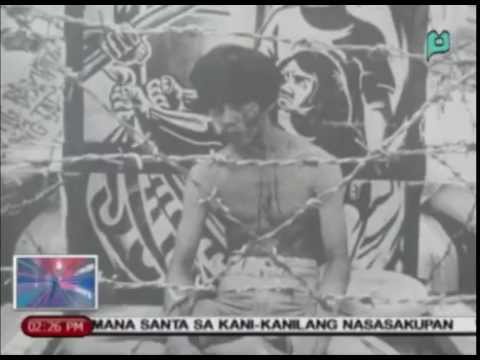
PTV News Xiao Time presents a special report about the life of Susan Quimpo’s brother Ronald Jan Quimpo who were among the thousands of Martial Law victims. Susan has five brother’s that belongs to the people who were arrested during Martial law and one of them is Ronald Jan who was very vocal on his advocacies despite his young age.
He began participating in UP rallies against the government during his high school years at Philippine Science high school. He was among the youth who were arrested and tortured by the government during Marcos dictatorship.
He and his friends were tortured, abused and some were even killed after the abduction. He came back home and finally released after 3 months but was not the same person who always participate in various protest. Susan Quimpo still remembers that day in 1977 when he left and promise to be back for dinner, he never went home until this day.
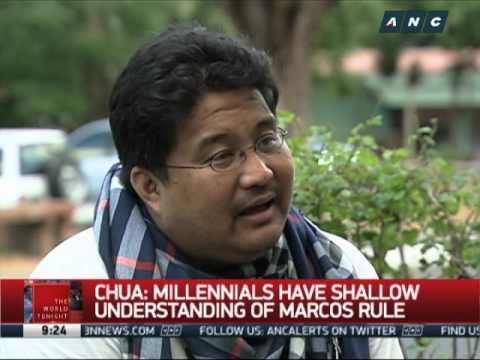
A special report on ANC where historians discussed how young Millennial of todays lacks knowledge about the Martial Law and its dark historical past. Historians, like Xiao Chua, expresses his concern that Martial Law experiences should be included in school text books show the students the truth about Martial Law during the Marcos era.
The Department of Education expresses its concern on how the new K to 12 systems should include the details of Martial Law in history lessons. They said that the current textbooks don’t tackle the dark days of Martial Law so they are now relying on school teachers and educators on giving lessons about Martial Law.
They can use some teaching guides and other reference materials to know more about Martial Law and People Power 1. Guided learning from actual experiences is also provided to let the Millennial knows the full details about the Martial Law.
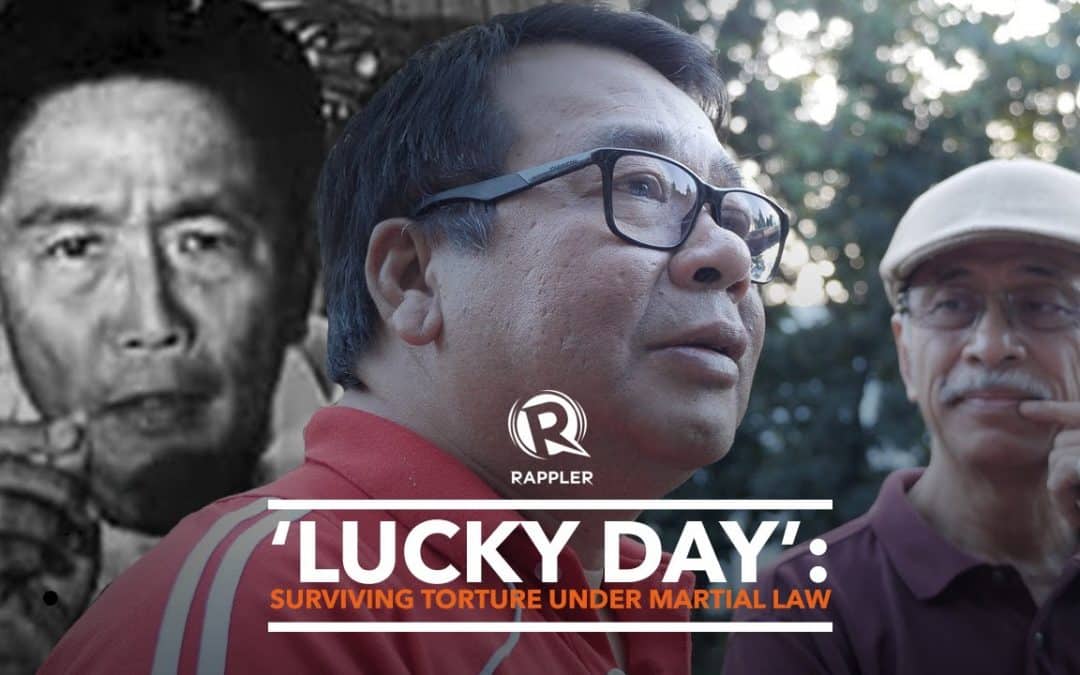
Boni Ilagan, a former political detainee, and Neri Colmenares, a church volunteer during Martial law recounts their own traumatic experiences in the Marcos regime. They were hurt to hear from Bong Bong Marcos himself that they were just plain political detractors who were only after the Marcos family’s money.
But from the victims themselves, they felt that its time for them to discuss their own experiences during the martial law. Boni recounts how he was tortured and how her sister was raped by the military men. It was painful for him hearing from Marcos son that they were only after money after all the gruesome experiences they had during the martial law. Neri Colmenares, a Bayan Muna representative recounts an incident in their province where he was a church volunteer.
There were dialogues between them and the military so Neri remembers how a military official talk to him by conducting a Russian roulette during an interrogation. These were only some of the thousand experiences of the Martial law survivors who were denied by the Marcos’s.
During the Marcos regime, Samar was one of the most affected provinces of the Martial Law crimes. But why Samar? The people in the province of Samar retold their gruesome experience in the hands of the Military during the Martial Law.
Hundreds of poor families were arrested and questioned on their links with the NPA’s because the whole province has been reportedly controlled by the famous rebellious group. The military arrested groups of innocent men and women from one particular municipality to question their links with the NPA’s.
They killed, raped, abused and tortured them one by one. At the height of this military operation in Samar, some high officials started the logging and mining concessions in the whole province. The people of Samar didn’t know their province is rich in bauxite minerals and large forestry. Little did they know, Samar is a rich and very promising province in terms of natural resources. Until today, mining remains a big threat in the province of Samar.
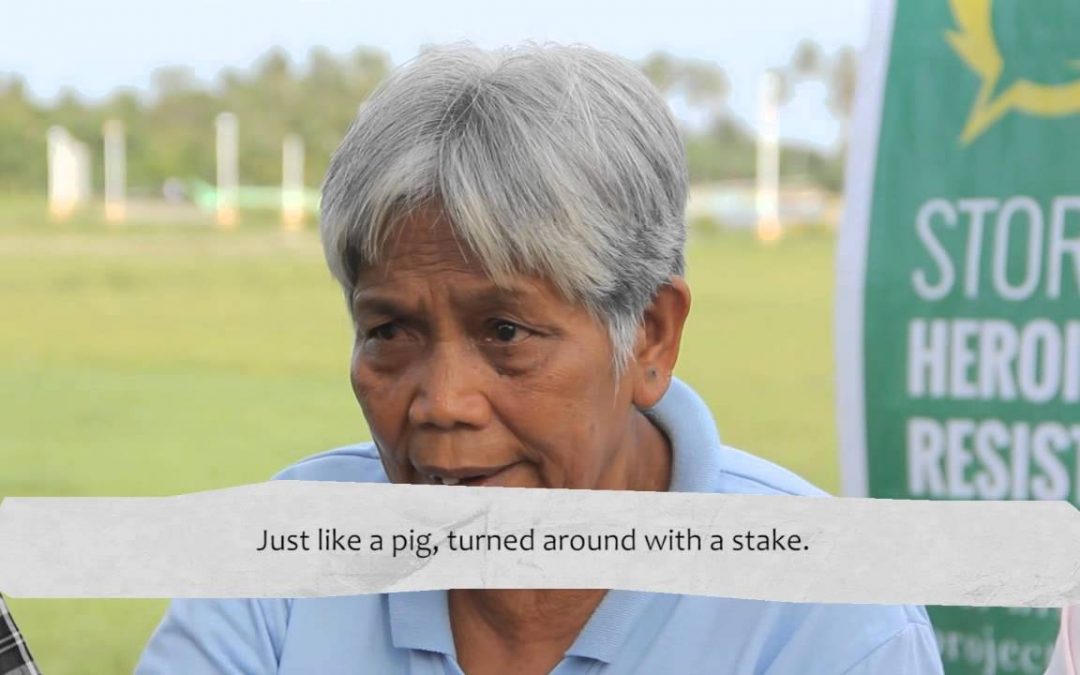
A documentary of stories from Martial victims compiled by the Commission on Human Rights. Stories and voices from the actual victims of Martial law retold on how they were arrested, interrogated, raped, abused and tortured by the Marcos government.
No one was spared, the poor, the middle class and the rich are all abused during the martial law. In this video, victims from all over parts of the Philippines told the different stories on how the military used various techniques in torturing them.
From electrocution, cigarette and flat iron burns, beating, injecting drugs, Russian roulette, whipping, drowning, strangulation, pepper torture within the female genitalia, animal treatment to psychological torture and other unbearable abusive acts of torture.
The victims and their families recount these unforgettable experiences in the hands of the Military. Today the victims are still suffering and still remain the same even if the government acknowledges what happened during the martial law.
An Easter presentation of Xiao time features on one of the victims of Martial Law, Meynardo G. Espeleta. Meynardo’s arrest was a controversial issue because the late Senator Benigno Aquino Jr. used his story as one of the “Evidence tortured into existence” which he gets from Internation Commission on Jurist.
On recent events, Xiao Chua, a historian, published a written research about “Tortyur” during Martial Law. The post has reached the real Meynardo Espeleta who is now residing in the United States.
Meynardo set a meeting with Xiao Chua while he is visiting the country and wanted to recount his own experience himself during the Martial Law. He tells his own story when he was arrested and tortured for 8 days before detaining him in Fort Bonifacio and Bicutan for more than one year.
After he was released, he still suffers from the experience and finds himself being blamed by his own colleagues because of alleged betrayal. He went abroad and finds hope thinking how Jesus Christ was also betrayed but still find forgiveness after betrayal. Mang Meynardo is now studying to become a permanent deacon and finds solace through his faith.

![[Xiao Time] RONALD JAN QUIMPO BAYANING NAWAWALA](https://www.martiallawchroniclesproject.com/wp-content/uploads/2016/02/Xiao-Time-RONALD-JAN-QUIMPO-BAYANING-NAWAWALA.jpg)
![Our Voices, Our Stories, Our Redemption [Uncut]](https://www.martiallawchroniclesproject.com/wp-content/uploads/2015/06/Our-Voices-Our-Stories-Our-Redemption-Uncut.jpg)