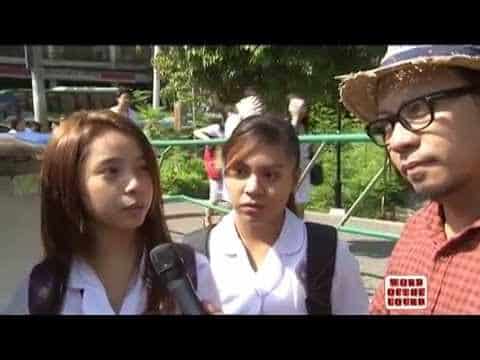
A witty but a meaningful take on Martial Law by Lourd de Veyra’s WORD OF THE LOURD. Lourd and his Friend Jun Sabayton conduct some short interviews with the students in Manila’s University Belt.
He wants viewers to see how the young students understand the Martial Law during the Marcos regime. Most of the students take are all positive and good comments about the martial law and Marcos dictatorship. Some students are even explaining that Marcos corruption is justified because of the good things he did when it was his term.
And according to them, all the information they know are taken from the internet. Lourd says that after all these years, the youth and students are not properly educated on what is the truth about our history. And we need to start educating our young students on what really happened on September 21st, 42 years ago.
Xiao Chua’s Xiao time made a special report of how did the Martial law stopped showing several violent cartoons on TV. One particular cartoon that we remember is Voltes V, which is very popular with kids during the 1980’s.
A certain Catholic personality was not happy with violent scenes so she calls out the president to stop the cartoon series. The president was persuaded so kids were devastated when they found out that their favourite cartoon has been cancelled. The report also clarifies what really happens to the controversial incident wherein famous celebrity Ariel Ureta reportedly punished by biking around camp crame.
When Ariel Ureta was interviewed, he denied that he was punished by commenting some jokes about the government, but he suspects that the government spread the rumours to warn others about commenting bad about the government. He said that it never happened and it was just an urban legend.
Xiao Chua’s Xiao time special report features how creative and witty the students protest during the Martial Law. We know how Filipinos like celebrations even if are experiencing some struggles and hardships during the Marcos era. This report remembered how the students of UP creatively make protest out of their witty minds.
The video shows a particular protest where students will wear their school ID’s from their buttocks so when guards would ask for their ID’s they will show their butts to the guards. Another incident where they wear black ribbons on their arms then would tell the guards that a relative has passed away even if it is not true.
The black ribbon symbolizes the death of democracy for the students so you would see hundreds of them wearing black ribbons on their arms. One creative student activist made a poem with a hidden cryptic message where it says “ MARCOS, DICTADOR, TUTA” made it to a popular magazine and the government didn’t notice. This only shows that Filipinos are still finding ways to make their lives enjoyable during the Marcos dictatorship.
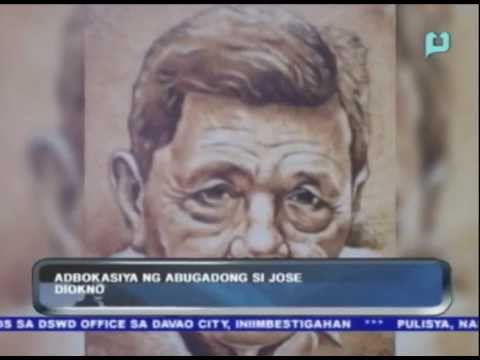
Xiao Chua’s Xiao time special report to commemorate the birth of the late Senator Lawyer Jose W. Diokno. This special report features the late senator’s life as politician, human rights lawyer and freedom advocate. Ka Pepe Diokno was born in Manila on February 26, 1922.
He is the son of a former senator and a British national. He excelled at Rizal College and graduated Summa cum laude in Commerce then pursue a Law course in the University of Santo Tomas. He is the only Filipino who top the bar and the CPA board exam at the same time.
He was a known politician for his fearless acts against corruption during the Diosdado Macapagal term. During the Marcos era, he served as a senator but was among the first politicians who were arrested when Martial was declared. He was detained for 2 years and continue his human rights advocacies after his release. He died in 1987 due to Lung disease but left a legacy for young Filipinos that we should make a great nation for our country.
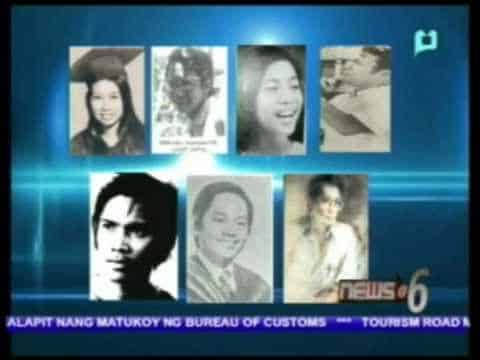
Xiao Chua’s special report on Xiao time to commemorate the people who suffer from Martial Law 40 years ago. This special report commemorates the victims of Martial law like the first political detainee who died within camp crame, Liliosa Hilao.
At the height of the Martial law historical killings and tortures, Liliosa was arrested while shouting “Democracy is dead in the Philippines”. Liliosa or Lily to his family and friends was a student leader and a poet when she was alive. She was detained, tortured and raped inside the camp crame.
Military announced that she committed suicide inside the men’s room by drinking muriatic acid. But when her family took her body, signs of torture and abuses were seen all over her body. She was only 23 years old. Lily is just one of the 3,240 that were killed, just one of the 34,000 who were tortured and just one of the 70,000 who were arrested.
Xiao Chua’s Xiao time special report on the good things that happen during the Martial Law. Aside from the famous government structures and forced disciplinary actions of the Marcos government, people should know that there were also some good things that happen during the Martial Law.
We all know that Benigno Aquino Sr. is the hero of Martial Law but we didn’t realize that thousands of Filipinos also fought the Marcos dictatorship. This is unfair for Ninoy and other Martial heroes because there are millions of Filipinos who also fought the Marcos dictatorship.
The students from UP who continuously organize against protest; labour union groups who fought against large companies; the poor and the rich who organized big rallies; professional artist who contributed in making movies, arts and music as protest to the government; religious sectors and leaders who organized prayer rallies; and politicians who are willing to help the victims of human rights and abuses; and of course all the millions of Filipinos who attended Ninoy’s burial to show the government that they are against Martial Law.

![[News@1] Xiao Time: Martial Law, Ariel Ureta at Voltes V](https://www.martiallawchroniclesproject.com/wp-content/uploads/2013/09/News@1-Xiao-Time-Martial-Law-Ariel-Ureta-at-Voltes-V.jpg)
![[News@1] Xiao Time: Nakatatawa at malikhaing protesta noong ‘Martial Law’](https://www.martiallawchroniclesproject.com/wp-content/uploads/2013/09/News@1-Xiao-Time-Nakatatawa-at-malikhaing-protesta-noong-Martial-Law.jpg)